Tanaka Electric
Tanaka Electric
Tanaka Electric
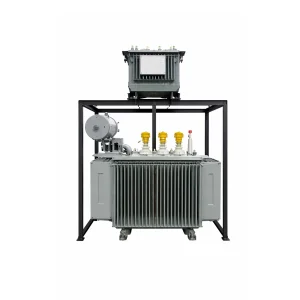
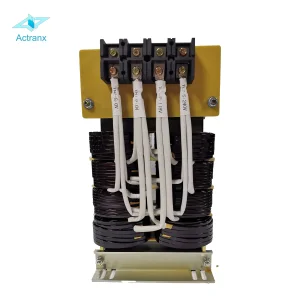
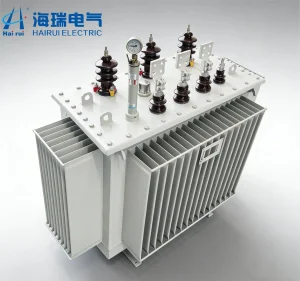
Explore our elite range of high-efficiency, multi-phase distribution and special-application electrical transformers engineered for global grid demands.
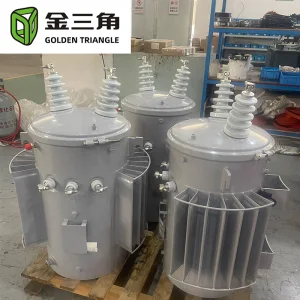
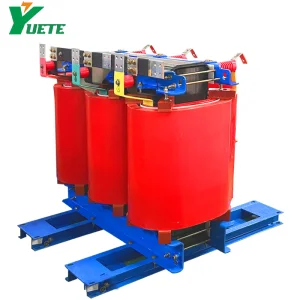
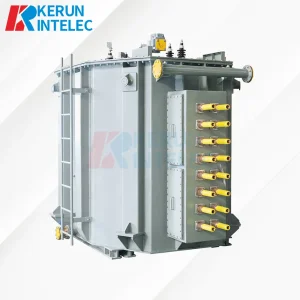
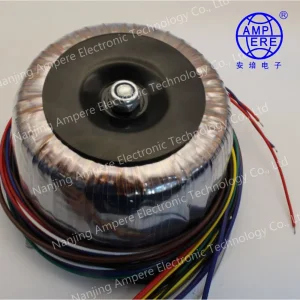
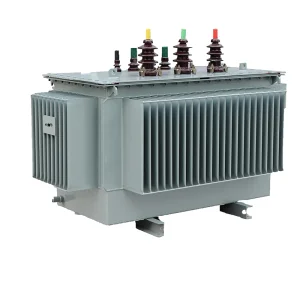
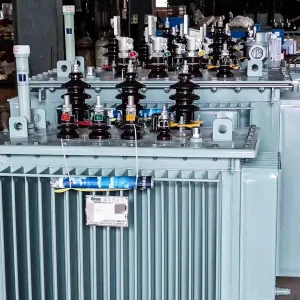
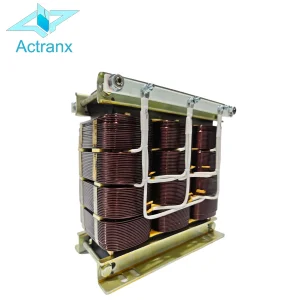
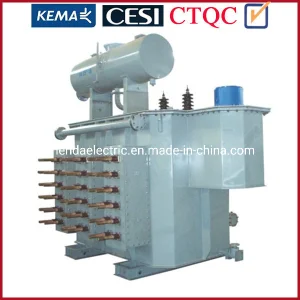
In power distribution and heavy industrial setups, configuration topology governs system reliability, safety, and compatibility. A Star-Delta (Wye-Delta) transformer is configured with its primary winding connected in a Star (Y) setup and its secondary winding connected in a Delta (Δ) setup, or vice versa (Delta-Star). This spatial geometry of winding distribution serves crucial electrical functions that direct power quality.
The delta-star arrangement is the industry standard for step-down distribution transformers. Connecting the high-voltage primary in Delta provides a path for third-harmonic currents to circulate internally, preventing these distortions from propagating back into the transmission lines. Meanwhile, the Star connection on the low-voltage secondary provides a stable neutral point.
This neutral connection is vital for supplying single-phase residential or commercial loads alongside three-phase industrial equipment. By ensuring an unbalance-resilient neutral line, system operators reduce the risk of neutral voltage shifting, which can destroy sensitive electronic devices downstream.
A standard Delta-Star configuration yields a 30-degree phase shift between the primary and secondary voltages. Alignment to Dyn11 (Delta-Wye, neutral out, 30-degree leading phase angle shift) is required for parallel transformer operation, reducing circulating currents during load-sharing cycles.
When selecting a Star-Delta transformer manufacturer, utility managers, EPC procurement agencies, and heavy-industry buyers prioritize operational efficiency, thermal capability, and compliance documentation. The global landscape is divided between traditional premium brands and advanced Chinese factories utilizing Industry 4.0 automation to deliver identical technical specifications at lower lead times and costs.
Premium manufacturers use 99.9% oxygen-free copper and high-grade electrical steel with low core loss (amorphous metal or grain-oriented silicon steel). Insulation systems utilize Class H or Class F materials to withstand cyclic thermal expansion without degrading dielectric strength.
Under short-circuit events, transformers encounter massive radial and axial mechanical stresses. Precision foil and continuous-disc winding systems increase the structural integrity of the coils, preventing physical deformation during phase-to-phase faults.
Whether deploying ONAN (Oil Natural Air Natural), ONAF (Oil Natural Air Forced), or dry-type AN (Air Natural) systems, core temperature monitoring and cooling ducts must maintain hot-spot temperatures well within international standards like IEC 60076.
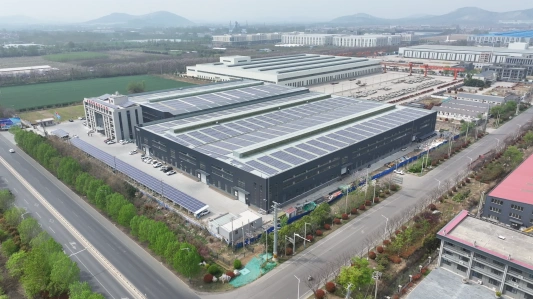
Established in 2005, Zhejiang Tanaka Electric Co., Ltd. represents the modern paradigm of Chinese Factory 4.0 transformer manufacturing. Operating with a robust registered capital of 110 million RMB, Tanaka Electric combines automation with custom engineering to design distribution, dry-type, and specialty furnace transformers.
Backed by 18 national patents, a dedicated R&D team featuring 15 senior engineers, 30 intermediate technicians, and 17 senior technicians, Tanaka Electric guarantees that every unit manufactured conforms to severe grid parameters and specific user requests. The company operates in strict alignment with ISO9001 and ISO14001 quality and environmental management system standards.
| Business Profile | High-Tech OEM/ODM Manufacturer & Global Exporter |
|---|---|
| Established / Capital | 2005 / 110 Million RMB |
| Factory Equipment | 120+ Advanced Sets (CNC Vacuum Casting, Foil Winders, Gradient Curing) |
| Certifications | CE, CCC, ISO9001 Quality, ISO14001 Environmental |
The manufacturing paradigm of power infrastructure has shifted. Companies like Zhejiang Tanaka Electric have integrated high-precision automation that ensures repeatability and eliminates structural weaknesses typical of hand-wound coils. Advanced factory floors leverage equipment optimized for thermal and mechanical resilience:
These units eliminate tension variances in the conductor coils. High-precision tension control systems ensure that paper insulation or enamel films are not stressed during winding, significantly reducing local hot-spots and inter-turn short-circuits.
Dry-type cast resin transformers require void-free epoxy encapsulation. Under vacuum conditions, epoxy resin penetrates every crevice of the high-voltage winding, preventing partial discharge (PD) events, ensuring a service life exceeding 30 years.
Precision temperature staging during resin curing guarantees uniform mechanical strength and prevents internal micro-fractures in the cast block. This process allows the transformer to withstand cold starts and harsh environments without structural cracking.
Furthermore, Zhejiang Tanaka Electric enforces a rigorous zero-defect quality protocol. From raw material incoming inspection (verifying the electromagnetic grade of silicon steel and the purity of copper wires) through step-by-step intermediate checks to the final high-voltage impulse test room, no compromised product can pass. This systematic verification ensures grid stability across hundreds of key power projects completed globally.
Procuring three-phase industrial transformers requires a thorough risk-mitigation framework. Industrial engineers and supply chain directors should evaluate manufacturers based on the following key metrics:
| Evaluation Parameter | Technical Expectation & Target Spec | How to Verify the Metric |
|---|---|---|
| Load Loss & No-Load Loss | Exceeding standard IEC 60076-2 or DOE 2016 efficiency limits. Low core loss steel is mandatory. | Review the routine test reports and temperature rise type test documentation. |
| Harmonics Tolerance | K-factor rating (e.g., K-4, K-9, K-13) depending on nonlinear loads like rectifiers or variable speed drives. | Ensure the winding design incorporates electrostatic shields and doubled neutral sizing. |
| Insulation & Dielectric Strength | Basic Insulation Level (BIL) up to 200kV+ for medium voltage systems. | Full wave lightning impulse tests and partial discharge measurement (< 10 pC). |
| Enclosure Protection Class | IP23 for indoor dry-type; up to IP67/NEMA 4X for outdoor or corrosive environments. | Check structural corrosion protection paint thicknesses (C4/C5 grade for coastal areas). |
As power grids adapt to decentralized green generation and localized smart grids, the requirements placed on three-phase transformers are shifting from simple voltage step-down units to smart grid nodes. The technology roadmap for the next decade centers on three fundamental areas:
Modern distribution transformers are increasingly equipped with fiber-optic temperature sensors embedded directly into the winding hot spots, combined with real-time gas chromatographs for dissolved gas analysis (DGA) in oil-filled units. This converts traditional maintenance intervals into predictive analytics models.
Ester-based natural fluids are replacing mineral oils in urban and marine environments. With fire points exceeding 300°C and 100% biodegradability within 28 days, these natural esters eliminate ecological risk and allow higher thermal overloads.
By replacing traditional silicon steel with amorphous metal, manufacturers reduce no-load (standby) losses by up to 70-80%. This reduction in constant losses is crucial for solar energy grids and utility systems trying to achieve net-zero carbon operations.
A single transformer design cannot meet the diverse operational realities of modern industrial sectors. Sourcing demands custom engineering matching the environmental and operational profiles of each vertical:
For large-scale infrastructure investments, supply security depends on post-purchase service and compliance. Reliable manufacturers maintain deep engineering support networks and ensure complete compliance with local grid codes.
All high-voltage apparatus must be subjected to standard factory acceptance tests (FAT). This includes winding resistance measurements, voltage ratio checks, phase displacement validation, no-load and load loss measurements, and dielectric testing. Top manufacturers provide complete documentation packages, including KEMA type test certificates, to expedite grid connection approvals.
Exported systems conform strictly to:
Get answers to the most common engineering, installation, and procurement questions regarding Y-Δ connections.
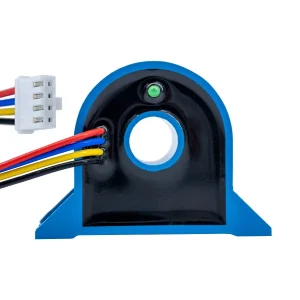
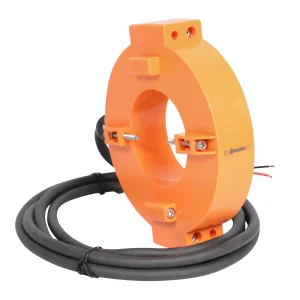
Discover our highly precise sensor transformers, rectifier designs, and substation equipment configured for heavy industry.