Tanaka Electric
Tanaka Electric
Tanaka Electric
Explore our leading OEM/ODM solutions engineered for global transmission systems, industrial networks, and heavy-duty renewable integrations.
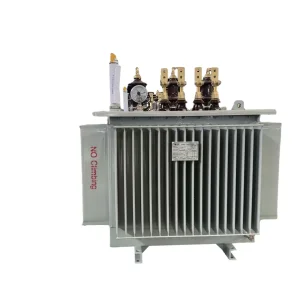
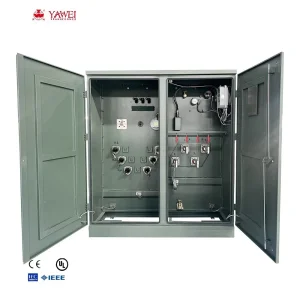
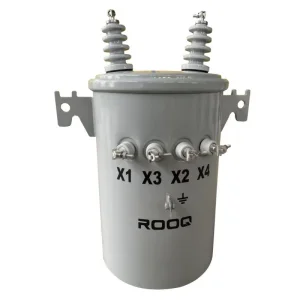
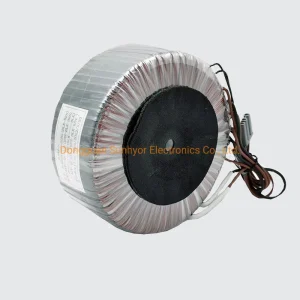
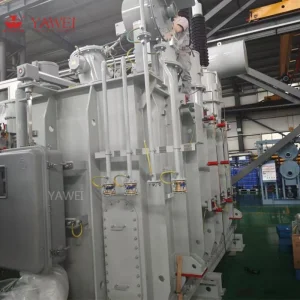
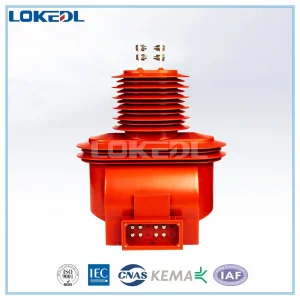
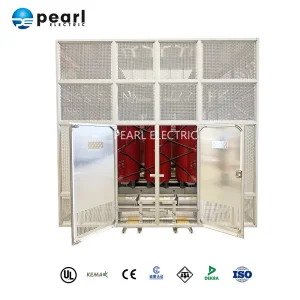
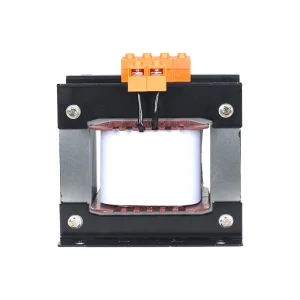
As global energy systems shift toward complex multi-voltage architectures, integration of decentralized energy systems, and high-load industrial processes, the demand for sophisticated magnetics has reached unprecedented levels. The three-winding transformer stands at the pinnacle of this technological evolution, serving as a critical node that bridges three different voltage systems within a single magnetic core circuit.
Unlike standard two-winding systems that facilitate simple point-to-point voltage conversion, a three-winding transformer contains primary, secondary, and tertiary windings. This configuration enables synchronous power transfer, decoupling of high-voltage transmission lines, medium-voltage distribution circuits, and low-voltage auxiliary systems or static reactive compensators. For utility engineers and heavy-industry procurement directors, leveraging an experienced OEM/ODM manufacturing partner is crucial to achieving optimal efficiency, specific short-circuit impedance matching, and long-term operating reliability.
By integrating a tertiary winding, power grids can mitigate harmonic distortion (especially triple harmonics), balance phase loads in unbalanced networks, and provide localized auxiliary supply directly from high-voltage substations without the capital expenditure of supplementary step-down stations.
A Premier High-Tech Transformer Enterprise
| Business Type: | Manufacturer |
|---|---|
| Established: | 2005 |
| Capital: | 110 Million RMB |
| Certificates: | ISO9001, ISO14001, CE, CCC |
| Product Scope: | Power, Dry-Type, Oil-Immersed Transformers & Substations |
The transition toward sustainable power networks requires the integration of diverse voltage systems. The global market for three-winding transformers is driven by key macro trends:
Our commitment to engineering excellence is backed by world-class machinery, rigorous control processes, and a forward-looking technological roadmap.
Utilizing high-precision CNC automatic winding systems, automatic foil winders, and CNC static vacuum casting machines to eliminate air gaps, maximize dielectric strength, and ensure reliable insulation integrity.
From raw material incoming inspection to final microcomputer-controlled gradient curing and high-voltage impulse testing, we follow strict ISO9001 quality management guidelines to target a zero-defect rate.
Supported by 15 senior engineers and 17 senior technicians, we design and produce custom vector groups, specialized impedance characteristics, and custom layouts tailored to client specifications.
Designing an efficient three-winding transformer involves addressing complex electromagnetic, mechanical, and thermal challenges. Because three windings are wrapped around the same magnetic core leg, the electromagnetic coupling and leakage flux distribution are inherently more complex than in a standard two-winding configuration.
Our engineering team leverages advanced finite element analysis (FEA) software to model the magnetic field lines. This simulation allows us to:
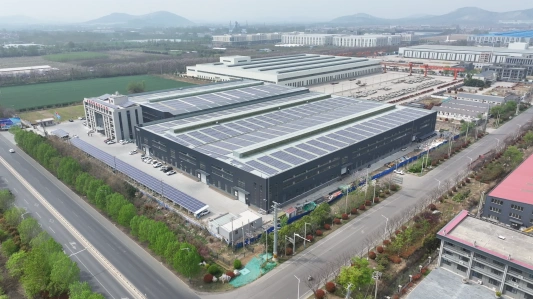
With a registered capital of 110 million RMB and a strong workforce including over 60 certified technical experts, we integrate engineering design and scale manufacturing. Our facility features more than 120 sets of advanced machinery—such as CNC automatic winding machines, CNC static vacuum casting, automatic foil winding lines, and microcomputer-controlled gradient curing furnaces. This enables us to manufacture specialized power and distribution transformers that comply with IEC, IEEE, CE, and CCC international standards.
To meet the diverse demands of our international clientele, we deliver tailormade macro solutions built around three-winding architecture:
1. Solar + Energy Storage Co-Generation Hubs: For modern utility-scale solar farms, we offer customized OEM step-up configurations. The primary winding connects to the high-voltage transmission grid (e.g., 110kV). The secondary winding links to the solar inverter array, while the tertiary winding connects directly to the BESS inverter systems. This setup eliminates the need for separate step-up transformers, reducing equipment footprint and footprint costs.
2. Metropolitian Infrastructure & Smart Substations: Urban zones are limited by spatial availability. Our compact, low-noise three-winding transformers enable utility providers to feed medium-voltage municipal distribution networks while dedicating a tertiary winding to power local subways, electric vehicle charging stations, or reactive power equipment.
3. Heavy Industrial Refining & Smelting Operations: Heavy industrial facilities demand high-current low-voltage rectifiers alongside stable medium-voltage motor power. Our customized dry-type and oil-immersed three-winding units provide decoupled, isolated power channels that prevent industrial harmonic noise from feeding back into the public grid.
Our senior engineering team addresses key questions regarding three-winding transformer design, selection, and application.
A three-winding transformer reduces the overall footprint, foundation weight, and installation cost by combining three voltage systems into a single magnetic core circuit. Additionally, it improves grid efficiency by reducing core losses, eliminating redundant cabling, and simplifying substation protection schemes. It also enables direct phase-balancing and harmonic dampening through the delta-connected tertiary winding.
Typically, three-winding transformers utilize capacity allocations such as 100/100/50% or 100/100/100% for the primary, secondary, and tertiary windings, respectively. Designating the tertiary winding at a lower capacity (such as 33% or 50% of the primary) reduces the volume of copper winding and associated core steel. This lowers the initial cost and weight while providing sufficient capacity for local auxiliary power or power factor correction equipment.
We design and manufacture a wide range of vector groups based on regional standards, including YNyn0d11, YNd11d11, and YNyn0yn0. For North American clients, we design systems that align with IEEE C57 standards. For European and Asian markets, we comply with IEC 60076 standards. Our engineers configure the phase angle displacement and vector relationships to ensure seamless synchronization with existing parallel transformers.
Our zero-defects program spans the entire manufacturing cycle. We source high-grade, cold-rolled grain-oriented (CRGO) silicon steel and 99.99% oxygen-free copper. Every assembly step is monitored in climate-controlled environments. Final products undergo rigorous dielectric testing, partial discharge tests, temperature rise simulations, and frequency response analysis (SFRA) using microcomputer-controlled testing equipment prior to packaging and dispatch.
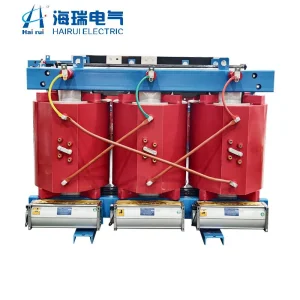
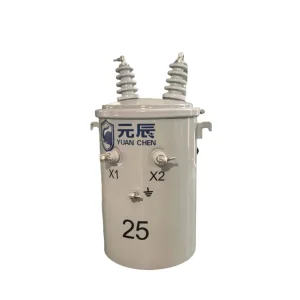
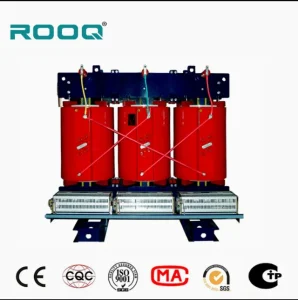
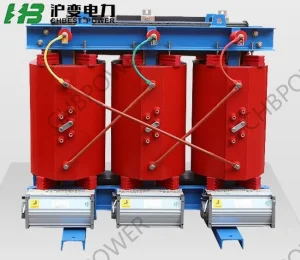
Browse our extensive selection of dry-type, oil-immersed, pole-mounted, and specialized industrial transformers.