Tanaka Electric
Tanaka Electric
Tanaka Electric
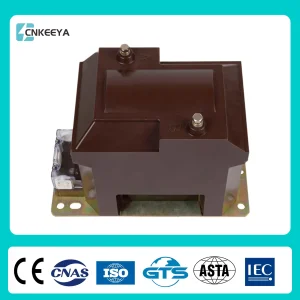
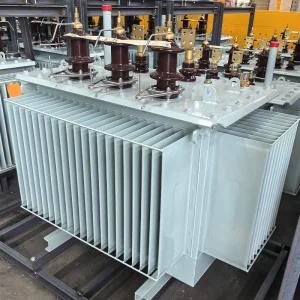
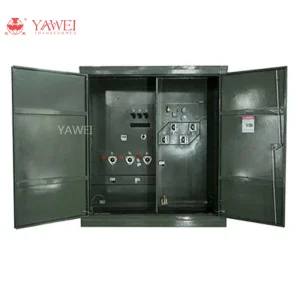
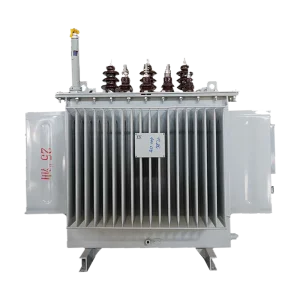
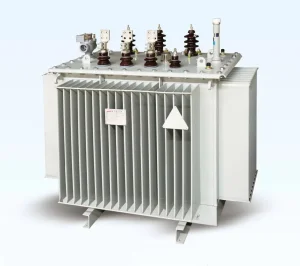
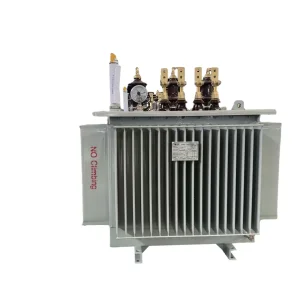
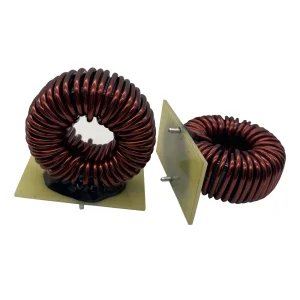
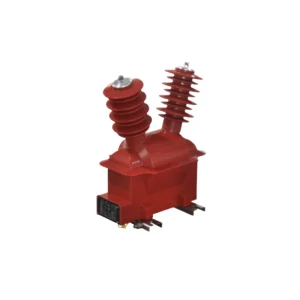
In the modern macro-energy layout, the selection of premium core materials forms the core differentiator in power transformation efficiency. The global electrical infrastructure market is undergoing a significant transition toward sustainability, demanding that transformer configurations achieve ultra-low losses, minimal magnetic saturation risks, and peak thermal efficiency. As a recognized leader in this domain, Zhejiang Tanaka Electric Co., Ltd. represents the standard of precision engineering and manufacturing capability within China's Silicon Steel Transformer industry.
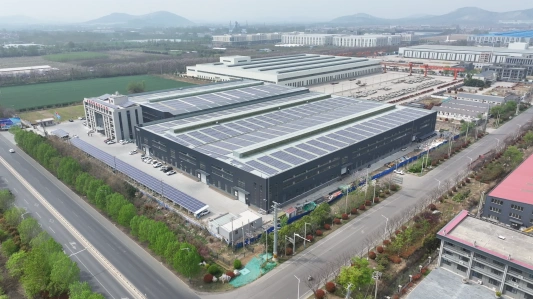
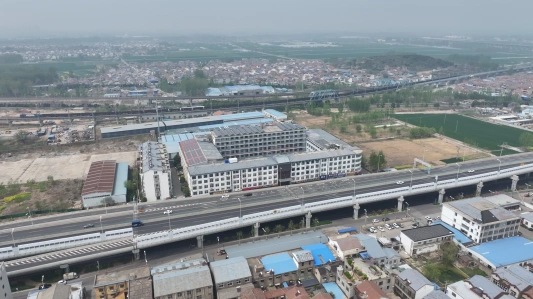
Established in 2005, Zhejiang Tanaka Electric Co., Ltd. is a high-tech enterprise specializing in the production, research, development, and sales of high-performance transformers and comprehensive power distribution equipment. Backed by a registered capital of 110 million RMB, the company combines raw engineering expertise with modern automation systems to deliver electrical solutions that satisfy stringent international efficiency frameworks.
Our core technical infrastructure is supported by a dedicated team of 15 senior engineers, over 30 intermediate technicians, and 17 senior technicians. This deep bench of engineering knowledge provides a solid foundation for continuous innovation, resulting in 18 valid patents and a production system certified under ISO9001, ISO14001, CE, and CCC criteria.
| Organizational Parameter | Verified Specification Details |
|---|---|
| Business Type | Manufacturer & Technical Solution Designer |
| Product Range | Power Transformers, Dry-type Transformers, Oil-immersed Distribution Systems, Substations, Instrument Transformers |
| Total Workforce | 201 to 500 Employees (Full-Time Equivalent) |
| Year Established | 2005 |
| Core Equipment Portfolio | CNC Automatic Winding Machines, CNC Static Vacuum Casting Plants, Automatic Foil Winding Systems, Microcomputer-controlled Gradient Curing Furnaces |
| Quality Certifications | ISO9001 Quality, ISO14001 Environmental, CE Safety Standard, CCC China Quality Certification |
Silicon steel, particularly Cold-Rolled Grain-Oriented (CRGO) steel, is critical for modern power transmission and distribution. Its magnetic properties, optimized along the rolling direction, allow transformers to function at high magnetic flux densities while keeping hysteresis and eddy current losses to a minimum.
As utility networks adapt to support intermittent renewable energy from wind and solar farms, demand for high-grade silicon steel transformers has risen. In places like the EU (with Eco-design Directive Tier 2 limits) and North America (following the DOE efficiency directives), standard iron-core grids are being phased out in favor of grain-oriented configurations with low core-loss signatures.
When choosing core materials for distribution networks, engineers often compare CRGO silicon steel with amorphous alloys. Both materials play vital roles in modern grid infrastructure:
| Performance Parameter | CRGO Silicon Steel Cores | Amorphous Alloy Cores |
|---|---|---|
| Saturation Flux Density (Bs) | High (Typically 1.9T - 2.03T) | Moderate (Typically 1.56T) |
| No-Load Core Losses (Fe loss) | Standard Low Loss (Excellent for high load factors) | Ultra Low (Up to 70% lower no-load loss than steel) |
| Mechanical Stress Sensitivity | Robust; easy to process, wind, and support structurally | High fragility; highly sensitive to structural stress |
| Noise Level (Magnetostriction) | Low and predictable; manageable structural acoustics | Higher baseline noise output, requires specialized damping |
| Operational Lifecycle Costs | Low maintenance, stable performance across decades | Higher initial capital, excellent long-term ROI on light load grids |
Zhejiang Tanaka Electric handles both manufacturing pathways. Our portfolio includes both traditional high-permeability CRGO silicon steel systems and low-loss Amorphous Alloy configurations. This allows us to supply equipment tailored to the specific loading profiles and geographical requirements of each project.
Modern power systems require specialized transformer configurations. Zhejiang Tanaka Electric develops system architectures optimized for specific operating environments:
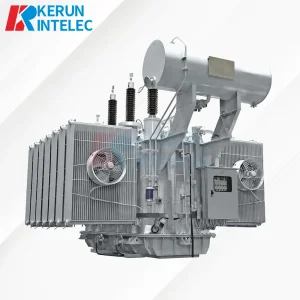
Our 22kV to 35kV step-up transformers are built specifically for outdoor installations in wind and solar farms. They are designed to withstand harmonic distortion, transient voltage spikes, and cyclic load variations typical of green energy generation.
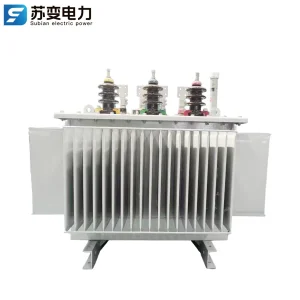
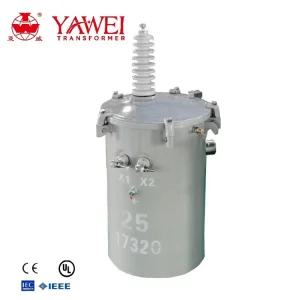
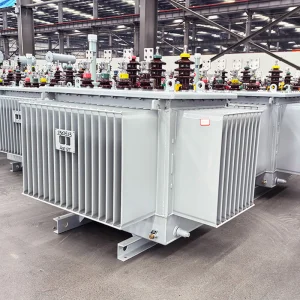
For high-density urban areas, we produce oil-immersed distribution transformers (such as our S11 and SZ11 series) and pad-mounted cabinets. These units feature compact footprints, low noise levels, and reliable short-circuit performance.
Designed for chemical processing, electroplating, and heavy smelting, our rectifier transformers cover ranges from 200kV up to 630kV. They deliver stable low-voltage, high-current DC feeds while keeping thermal and harmonic losses to a minimum.
Our long-term R&D efforts focus on two main areas: optimizing magnetic core efficiency and integrating digital monitoring systems.
Cold rolling aligns the crystal grains of silicon steel along the rolling direction, lowering its magnetic anisotropy. This creates a low-resistance path for magnetic flux, which minimizes hysteresis losses during alternating excitation cycles.
S11/SZ11 designs use stacked CRGO silicon steel cores, which lower no-load losses by roughly 30% and load losses by 15% compared to older S9 series transformers. They offer reliable short-circuit resistance, low operational noise, and stable thermal performance under variable loads.
We maintain strict control at every production stage. Raw materials undergo testing upon arrival, we wind coils with high-precision CNC automatic winding machines, execute vacuum casting under computer-controlled gradient curing, and perform complete routine tests before shipping to ensure ISO9001 compliance.
Yes, our engineering team designs products according to various regional and international standards. We customize units to meet IEC60076, ANSI/IEEE C57, CE, and CSA requirements, ensuring compliance with local grid codes.
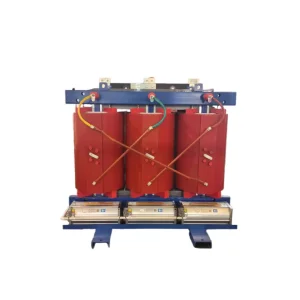
Dry-type transformers cast in epoxy resin eliminate the risk of oil leakage and fire hazards. They are self-extinguishing, require minimal maintenance, and provide high resistance to moisture and environmental pollution, making them well-suited for high-rise buildings, subways, and commercial complexes.