Tanaka Electric
Tanaka Electric
Tanaka Electric
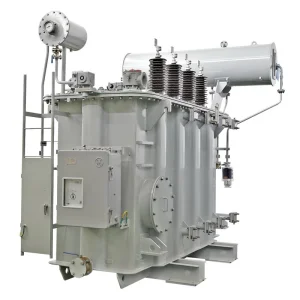
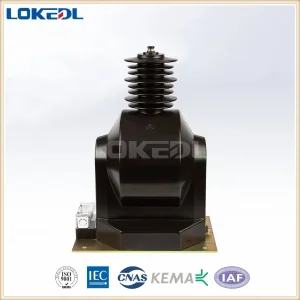
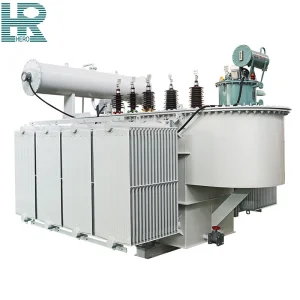
Explore our leading industrial power, substation, and instrument transformer collection engineered for high-performance and reliable energy transmission.
A Leading High-Tech Pioneer in Polyphase Engineering & Power Substation Technologies
Zhejiang Tanaka Electric Co., Ltd. is a high-tech enterprise specializing in the production, research, development, and sales of high-performance polyphase transformers and customized power distribution networks. Driven by core engineering excellence, our operations are backed by a strong technical team featuring 15 senior engineers, over 30 intermediate technicians, and 17 senior technicians. This unparalleled pool of technical talent ensures that every step-up, step-down, oil-immersed, or dry-type transformer meets the most rigorous international standards.
To support high-precision manufacturing, we operate over 120 sets of advanced equipment in our modern factory:
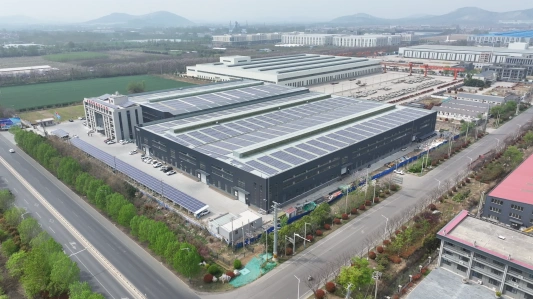
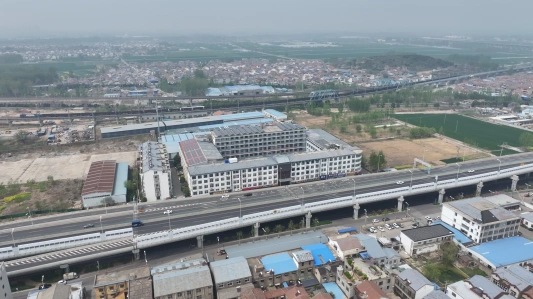
Transparent enterprise indicators verified in accordance with ISO9001 and ISO14001 Quality Standards.
| Profile Area | Certified Standard & Details |
|---|---|
| Business Type | Original Equipment Manufacturer (OEM) & Design Engineering Factory |
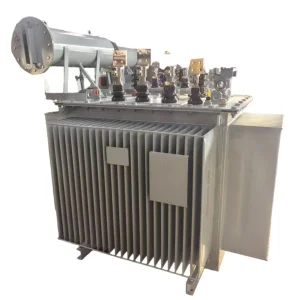
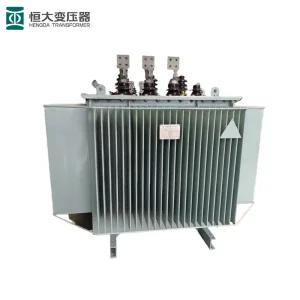
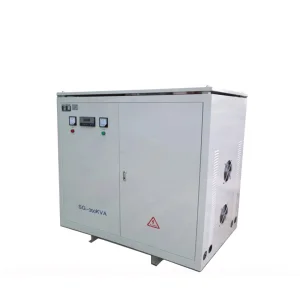
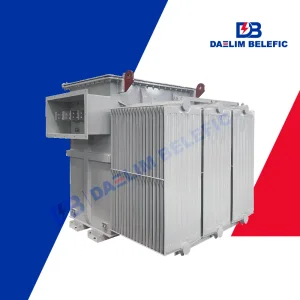
| Primary Product Scope | Polyphase Transformers, Power Distribution Substation Equipment, Dry-type Amorphous Alloy Transformers, Oil-Immersed Substation Systems |
| Registered Capital | 110 Million RMB |
| Industrial Approvals & Certifications | CE, CCC, ISO9001, ISO14001 Standards Compliance |
| Engineering Force | 15 Senior Engineers, 30+ Intermediate Technicians, 17 Senior Production Technicians |
| Global Sourcing Integration | Complete sourcing support for adjacent electrical switchgear, distribution cabinets, and customized accessories |
Analyzing the structural advantages, raw material integration, and manufacturing scale of the Chinese power grid equipment supply chain.
China is home to the world's most dense cluster of high-grade cold-rolled grain-oriented (CRGO) silicon steel production and high-purity oxygen-free copper processing. This localized supply chain reduces raw material transit costs and guarantees top-tier core laminations with exceptionally low magnetic hysteresis losses.
By executing localized research and development under strict global mandates, Chinese manufacturers successfully bridge the gap between heavy industrial scaling and micro-engineered precision. The integration of robotic laser core cutters and automated varnish impregnation units ensures consistency across multi-megavolt-ampere orders.
Whether you require standard 11kV step-down distribution setups, specialized dry-type resin-insulated configurations, or complex dual-voltage furnace transformers, Zhejiang Tanaka provides flexible modification to mechanical footprint, vector groups (e.g., Dyn11, Ynd11), and cooling configurations.
Exploring decarbonization, grid intelligence, and advanced core topology in modern polyphase electrical machinery.
Modern smart grids require extreme reductions in no-load loss metrics. Our custom amorphous alloy dry-type transformers feature a non-crystalline atomic structure, which curtails eddy current losses by up to 70% compared to traditional silicon steel core options. This shift is critical for achieving environmental designations like the DOE Standard for energy efficiency.
For outdoor installations and dense industrial projects, traditional mineral oil represents a fire hazard and environmental liability. The industry is rapidly adopting natural and synthetic ester-filled transformers. These fluids offer higher fire points (>300°C) and are readily biodegradable, minimizing contamination risks while extending the operating life of the paper insulation systems.
Unplanned power grid shutdowns can cost industrial operations millions. Next-generation polyphase transformers are increasingly integrated with online Dissolved Gas Analysis (DGA) sensors and real-time winding temperature indicators (WTI). These technologies feed performance metrics into central SCADA software, changing maintenance models from reactive to predictive.
With the rise of nonlinear loads such as high-frequency LED networks, variable speed drives, and server racks, harmonic distortion is a growing concern. Polyphase isolation transformers featuring delta-wye winding configurations naturally suppress triplen harmonics (3rd, 9th, 15th), protecting sensitive downstream instrumentation from grid noise.
How our comprehensive power portfolio resolves key structural challenges in energy distribution.
Solar photovoltaic fields and wind farms require immediate step-up capability from low generation voltages to medium voltage (MV) grids. Our customized pad-mounted step-up transformers are designed to withstand transient overvoltages and harsh outdoor climates, protecting wind turbines and solar inverter setups.
Arc furnace operations present extreme thermal conditions and repeated short-circuits. Zhejiang Tanaka’s 110kV MVA-class furnace transformers utilize reinforced winding geometries and high-capacity cooling (ONAN/ONAF) to sustain continuous thermal cycling without dielectric breakdown.
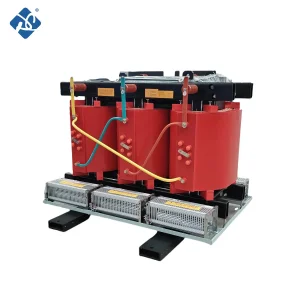
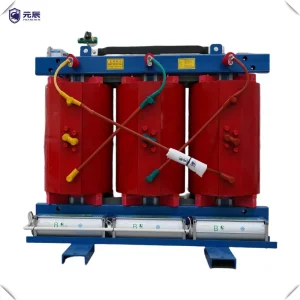
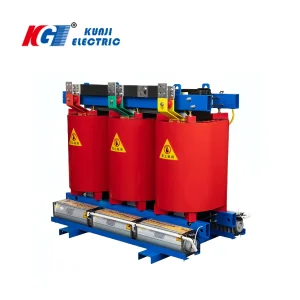
Urban distribution requires compact footprints and strict fire safety standards. Our high-insulation dry-type transformers, utilizing cast epoxy resin, offer robust self-extinguishing capabilities, meaning they can be safely installed in indoor basements and commercial complexes without requiring oil containment vaults.
Important evaluation criteria for technical compliance and long-term cost optimization.
The initial purchase cost of a polyphase transformer represents only a fraction of its lifetime value. Smart buyers prioritize low-loss core designs. By evaluating load losses (copper losses) and no-load losses (iron losses), engineering teams can estimate operational savings over a typical 25-to-30-year operational lifecycle.
Ensure your manufacturer matches regional grid rules. This includes IEEE/ANSI C57 standards for North America, IEC 60076 standards for European Union and international networks, and local approvals like CE, CCC, and local grid authority compliance.
High reliability is verified through strict testing regimens. Our state-of-the-art facility conducts comprehensive FAT before shipment, including:
Answers to key engineering, installation, and procurement questions.
A polyphase transformer is an electrical device designed to handle multiple alternating current phases (most commonly three-phase) within a single magnetic core structure. Compared to using multiple single-phase units, polyphase designs save space, improve operating efficiency, reduce materials like copper and steel, and deliver a more balanced, continuous flow of power.
Oil-immersed transformers use mineral or ester fluid for insulation and cooling, making them ideal for high-voltage, outdoor applications due to superior heat dissipation. Dry-type transformers use air cooling and epoxy resin insulation, which reduces fire risk and makes them ideal for indoor settings like offices, hospitals, and underground subways.
Amorphous alloy cores feature a highly randomized molecular structure that reduces magnetic friction compared to traditional silicon steel. This leads to a 70% decrease in no-load losses, improving energy conservation during periods when the transformer is energized but not carrying load.
The vector group defines the phase displacement and winding configurations between primary and secondary terminals. For instance, Dyn11 indicates a delta primary connection, a star (wye) secondary with a neutral, and an 11-clock-position (30-degree lead) phase shift. Matching vector groups is critical for operating transformers in parallel to prevent short circuits.
FAT includes routine tests like winding resistance measurement, turns ratio evaluation, and insulation resistance checks, along with type tests such as temperature rise tests, lightning impulse tests, and partial discharge analysis to ensure long-term durability.
High-durability configurations built to maintain voltage stability under demanding grid conditions.