Tanaka Electric
Tanaka Electric
Tanaka Electric
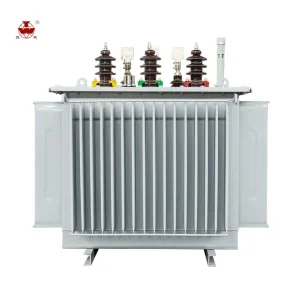
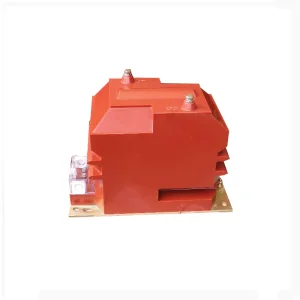
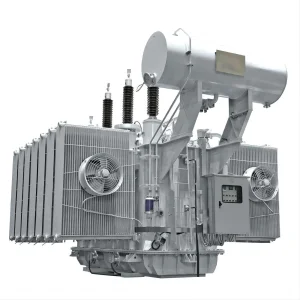
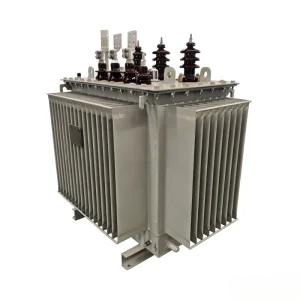
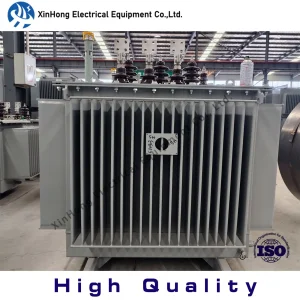
Explore our high-performance liquid-filled, dry-type, and instrument transformers engineered to meet strict international standards.
Advanced electrical design providing galvanic isolation, multi-level voltage matching, and harmonic cancellation across industrial applications.
Multi-winding transformers, unlike standard dual-winding variations, are engineered with three or more magnetically coupled circuits within a single structural core. This advanced configuration permits energy exchange between multiple voltage levels, serving as a vital link in complex grid structures, chemical plants, and heavy renewable installations. By integrating multiple primary, secondary, or tertiary windings, electrical engineers achieve optimized system footprint profiles, reduced cabling overheads, and enhanced short-circuit fault management.
One of the primary benefits of utilizing multi-winding systems is the capacity for harmonic cancellation. In modern industrial networks characterized by abundant non-linear loads (e.g., Variable Frequency Drives, large rectifier systems, and solar inverters), multi-winding configurations configured with specific phase shifts (such as Dy11d0 or Dy11d5) effectively neutralize 5th, 7th, 11th, and 13th order harmonics. This mitigates grid distortion, eliminates heating in neutral lines, and ensures compliance with global power quality guidelines such as IEEE 519.
Choosing the correct winding architecture depends on system voltage levels, thermal limits, and isolation requirements. Our engineering team designs:
Why global EPCs, grid utilities, and industrial enterprises rely on Zhejiang Tanaka Electric Co., Ltd.
Utilizing state-of-the-art CNC automatic winding machines and automatic foil winding systems. Our manufacturing lines guarantee precise winding tension, zero physical defects, and absolute geometric accuracy, minimizing localized dielectric stresses.
Our facilities deploy advanced CNC static vacuum casting equipment combined with microcomputer-controlled gradient curing furnaces. This process prevents air pockets, guaranteeing low partial discharge levels (<10pC) for dry-type applications.
Operating in strict compliance with ISO9001 and ISO14001, we implement layered quality gates from raw material reception to final load loss, no-load loss, impulse voltage, and temperature rise type testing.
Registered Capital (RMB)
National Patents
Sets of Advanced Equipment
Senior/Intermediate Engineers
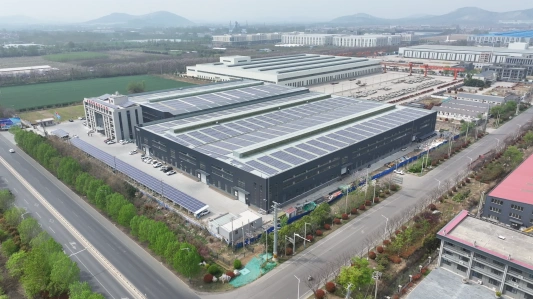
Solving modern power challenges: Grid stabilization, renewable energy integration, and heavy smelting operations.
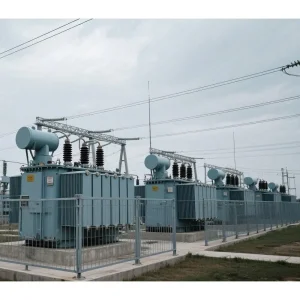
As standard grids transition to higher voltages to minimize transmission losses, utility firms face challenges matching older legacy distribution substations. Multi-winding transformers step down high voltages (e.g., 110kV/220kV) into multiple medium-voltage lines (e.g., 35kV and 10kV) simultaneously. This eliminates the need for multiple single-voltage units, reducing space, oil volume, and civil work requirements.
In utility-scale PV plants and Battery Energy Storage Systems (BESS), multiple inverters generate decentralized low-voltage outputs. Our multi-winding solar duty transformers step up these distinct outputs through isolated secondary windings, connecting directly to the transmission grid. High isolation levels prevent circulating currents and limit cross-talk between inverter banks.
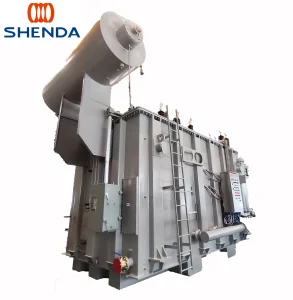
EAF operations present highly volatile loads with severe voltage fluctuations and cyclic short circuits. Our custom 10000kVA to 12500kVA Electric Arc Furnace transformers are engineered with high mechanical strength to withstand intense electrodynamic forces. Integrated secondary windings provide variable voltage ranges for matching melting and refining stages.
A premier manufacturer and developer of power transformer technologies for global energy networks.
Established in 2005, Zhejiang Tanaka Electric Co., Ltd. is a recognized high-tech enterprise dedicated to the design, research and development, manufacturing, and distribution of standard and customized transformers and power distribution equipment. Located in China's industrial manufacturing heartland, our company maintains a registered capital of 110 million RMB and employs between 201 and 500 professionals.
Our competitive advantage lies in our highly qualified technical team. Spearheaded by 15 senior engineers, 30+ intermediate technicians, and 17 senior technicians, our engineering department designs bespoke solutions for complex projects. Tanaka Electric holds 18 active utility and design patents, highlighting our contribution to power efficiency and core reliability. We operate modern production facilities containing over 120 sets of advanced machinery. Furthermore, to add value for international clients, we offer specialized procurement services to source matching switchgears, busbars, and distribution components.
| Business Type: | Manufacturer, OEM/ODM Exporter |
|---|---|
| Product Range: | Multi-Winding Transformers, Power Transformers, Dry-type Transformers, Pad-Mounted Substation Transformers, Transformer Accessories, Oil-immersed Transformers, Distribution Boxes |
| Established Year: | 2005 |
| Registered Capital: | 110 Million RMB |
| Total Employees: | 201 ~ 500 |
| Certified Standards: | ISO9001, ISO14001, CE, CCC, UL Compliance, IEEE/IEC Compliant Designs |
Answers to crucial technical and commercial questions compiled by our application engineering team.
A three-winding transformer reduces the physical footprint, concrete pad foundation requirements, oil containment structures, and cabling. It also provides higher efficiency with lower core losses compared to two separate units. Structurally, it allows for direct electromagnetic coupling between three distinct voltage systems, facilitating power sharing and harmonic attenuation.
By shifting the secondary windings by a predetermined angle (e.g., 30 degrees for a 12-pulse system or 15 degrees for a 24-pulse system), the phase-displaced harmonic currents generated by non-linear loads cancel each other out on the primary side of the transformer. This results in cleaner grid power and protects upstream equipment from thermal stresses.
We perform routine and type testing including: Winding Resistance, Voltage Ratio and Vector Group Verification, Impedance Voltage & Load Loss, No-Load Loss & Current, Insulation Resistance (Megger), Applied Voltage tests, Induced Overvoltage tests, Partial Discharge measurement, and Temperature Rise testing.
Yes, our engineering team is fluent in both IEC (European/International) and IEEE/ANSI (North American) standards. This includes specific tank designs (like American-style pad-mounted transformers with radial/loop feed configurations) and customized terminal arrangements.
In high-voltage auto-transformers, a delta-connected tertiary winding is frequently integrated to provide a path for third-harmonic currents, reducing third-harmonic voltages in the main windings. Additionally, it helps stabilize the neutral point of Y-Y connected systems and can power local distribution grids or auxiliary substation equipment.
Leakage impedance determines short-circuit current levels and voltage regulation. We optimize this through precise physical coil placement, adjustments in winding height, insulation distance calculations, and magnetic flux simulations. This ensures balanced impedance profiles across all windings.
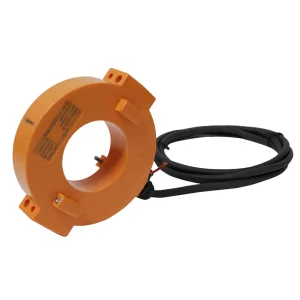
Browse our advanced instrument, low-frequency, amorphous alloy, and high-frequency transformer configurations.