Tanaka Electric
Tanaka Electric
Tanaka Electric
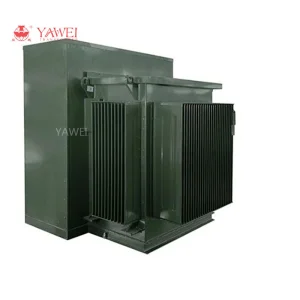
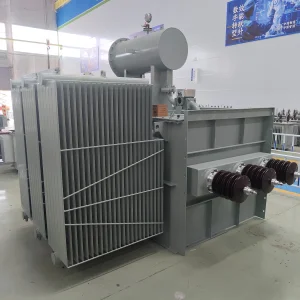
Explore our leading engineering portfolio including high-efficiency dry-type, oil-immersed, and custom pad-mounted electrical units designed for long-term operational resilience.
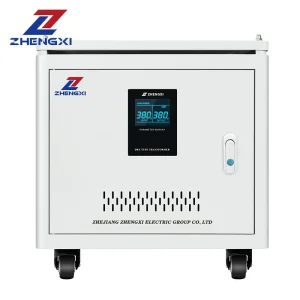
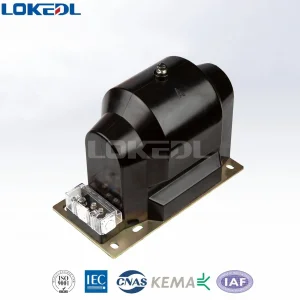
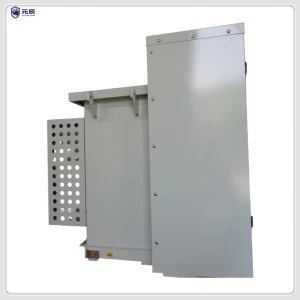
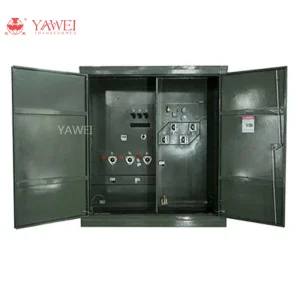
In modern power distribution systems, the lamination core transformer remains a foundational pillar for electromagnetic efficiency and voltage transformation. As global economies accelerate the integration of renewable energy grids, high-capacity infrastructure, and smart cities, the demands placed upon laminated core designs have intensified. Industrial lamination core transformers mitigate two primary components of electromagnetic power loss: hysteresis losses and eddy currents. By utilizing stacked, insulated sheets of cold-rolled grain-oriented (CRGO) silicon steel, these units optimize the magnetic flux path while minimizing thermal dissipation.
The global business environment for transformer components is undergoing a rapid transition. Tightening environmental regulations, such as the EU Ecodesign directives and US DOE efficiency benchmarks, demand that utility companies source transformers with ultra-low core losses. China has positioned itself as the primary epicenter for high-quality wholesale lamination core manufacturing. Chinese factories have transitioned from basic mechanical assembly shops to ultra-modern, research-driven hubs featuring precision metallurgical treatment, laser-scribed core cutting, and state-of-the-art winding systems.
Information Gain Insight: The choice of lamination core construction (such as step-lap stacking vs. traditional butt-lap designs) has a direct impact on the Total Cost of Ownership (TCO). A step-lap configuration reduces the no-load loss by up to 15% and noise levels by 3-8 dB, offering major operational savings over a typical 30-year utility lifecycle.
Lamination core transformers allow seamless grid upgrades, ensuring minimal transmission losses over high-voltage AC networks while supporting bi-directional power flows from solar and wind farms.
Procuring wholesale from vetted Chinese manufacturers cuts capital expenditures (CAPEX) significantly while preserving long-term structural reliability and safety parameters.
Advanced silicon steel laminations coated with inorganic varnishes guarantee thermal stability, making them suitable for sub-zero marine offshore applications or high-heat desert operations.
The performance of a lamination core is determined during the alloy metallurgy stage. Cold-rolled grain-oriented (CRGO) steel sheets with thicknesses ranging from 0.23 mm to 0.35 mm are standard. The steel is alloyed with approximately 3% silicon to increase electrical resistivity, which directly suppresses eddy currents.
The grain orientation process aligns the easy axis of magnetization parallel to the rolling direction. This achieves maximum permeability and minimal hysteresis loss under steady alternating magnetic fields.
At our manufacturing facilities, high-precision CNC longitudinal slitting lines and cross-cut lines slice the silicon steel with minimal burr heights (strictly kept under 0.02 mm). High burrs can puncture the inter-lamination insulation, creating local conductive paths that exacerbate eddy current losses.
We employ 45-degree multi-step lap joints in our assembly. Unlike older 90-degree stack methods, mitred joints streamline the transition of magnetic flux lines between the limbs and yokes, lowering magnetic resistance and suppressing audible humming.
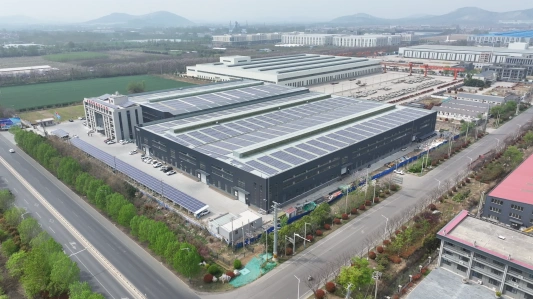
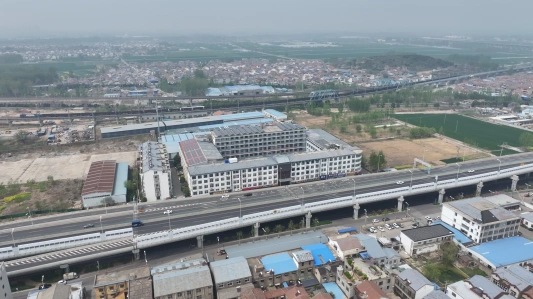
Engineering excellence through advanced R&D, structural patent innovations, and state-of-the-art CNC automation.
Zhejiang Tanaka Electric Co., Ltd. is a high-tech enterprise specializing in the production, research and development, and sales of transformers and related products. Established in 2005 with a registered capital of 110 million RMB, we have spent nearly two decades refining our design capabilities. Our engineering roster includes 15 senior engineers, over 30 intermediate technicians, and 17 senior technicians. This deep pool of domain expertise provides a solid guarantee for the research and production of customized electrical configurations.
Our manufacturing plant features over 120 sets of advanced machinery, including CNC automatic winding machines, CNC static vacuum casting systems, Automatic foil winding machines, and Microcomputer-controlled gradient curing furnaces. To ensure high quality, we enforce strict QC measures across all links: from raw material procurement and incoming inspection to production, finished product inspection, warehousing, delivery, and installation. We integrate a "zero defects" standard into every detail.
Operating under the ISO9001 quality management system and ISO14001 environmental standards, we supply high-performance solutions globally. Our transformers carry CE and CCC certifications, verifying compliance with international safety and performance criteria.
A quick summary of our operational boundaries, structural capacities, and regulatory standards.
| Business Type: | Manufacturer, OEM/ODM Provider, Wholesale Exporter |
|---|---|
| Product Range: | Power Transformers, Dry-type Transformers, Oil-immersed Transformers, Transformer Substations, Transformer Accessories, Distribution Boxes |
| Technical Equipment Assets: | CNC Automatic Winding Machines, CNC Static Vacuum Casting, Automatic Foil Winding, Gradient Curing Furnaces |
| Total Employees: | 201 ~ 500 Active Personnel |
| Year Established: | 2005 |
| Compliance Certifications: | ISO9001 Quality, ISO14001 Environmental, CE Mark, CCC Certification |
| Registered Intellectual Property: | 18 Active Utility & Structural Design Patents |
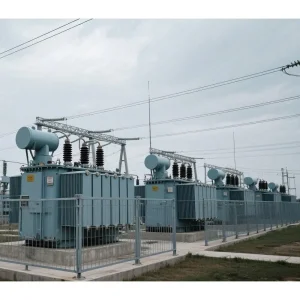
Modern utility-scale PV plants and wind fields operate in variable environments. Our customized pad-mounted step-up transformers connect inverter stations directly to high-voltage transmission lines. Designed to withstand daily thermal cycling and harmonic distortions common in renewable energy generation, these units feature electrostatic shields to prevent voltage surges from damaging upstream semiconductor arrays.
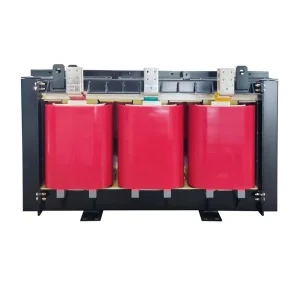
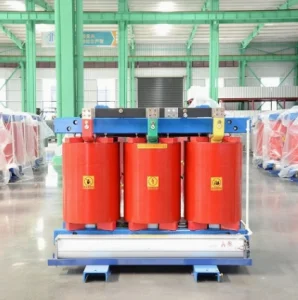
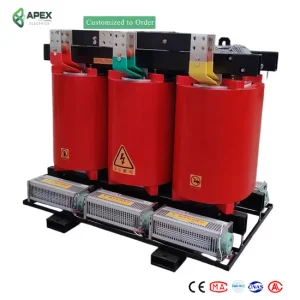
Safety is paramount in high-density urban environments. Our 10kv Dry-Type Cast Resin Transformers provide power distribution without fire risk. They utilize self-extinguishing epoxy resins and do not require cooling oils, making them suitable for installation in high-rise buildings, underground subway substations, and retail complexes.
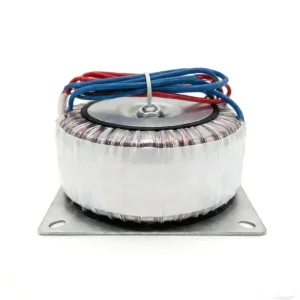
For heavy manufacturing facilities utilizing CNC machining, electric arc furnaces, and automatic assembly lines, clean voltage stability is critical. Our low-loss isolation transformers and autotransformers prevent line noise, protect sensitive control circuits, and handle short-circuit stresses in harsh industrial settings.
The next generation of transformer technology focus on smart integration and eco-friendly design. Zhejiang Tanaka Electric is focusing on several key technical initiatives to support this transition:
Direct answers regarding specifications, materials, procurement, and customization options.
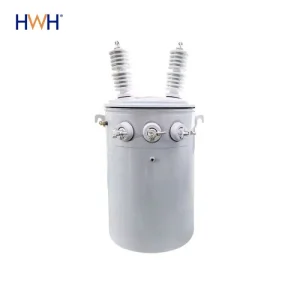
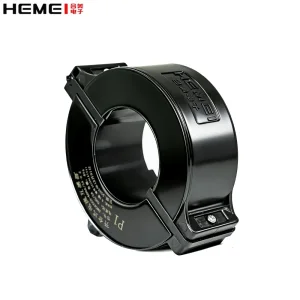
Discover our specialized lineup of distribution, step-down, and current measurement units engineered for stable grid operations.