Tanaka Electric
Tanaka Electric
Tanaka Electric
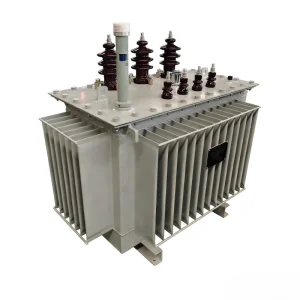
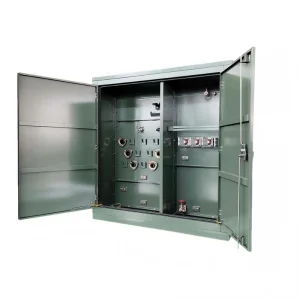
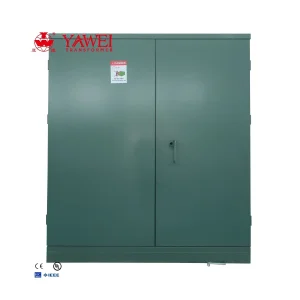
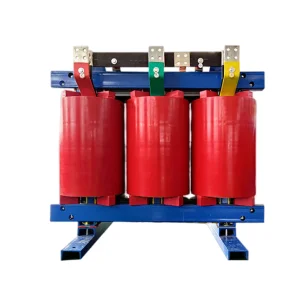
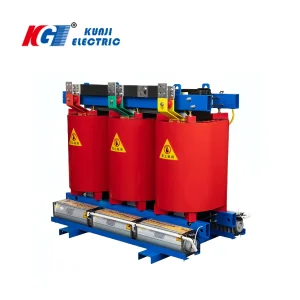
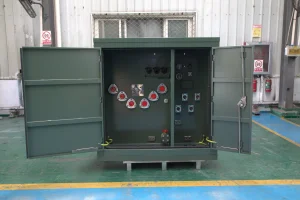
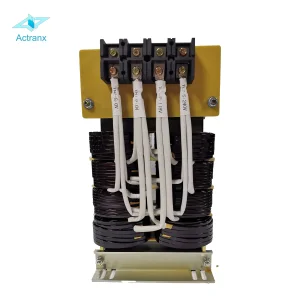
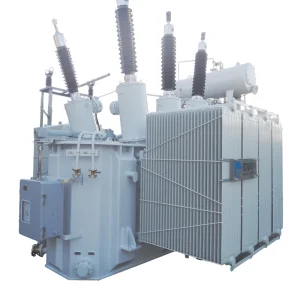
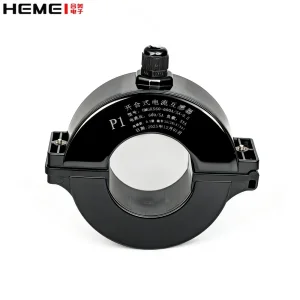
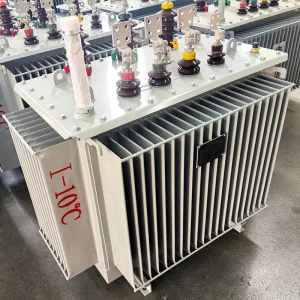
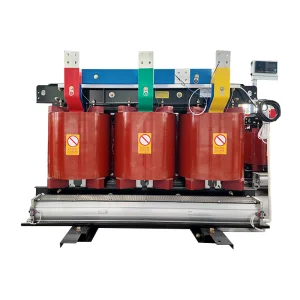
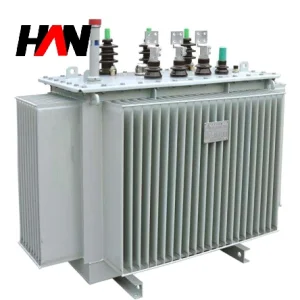
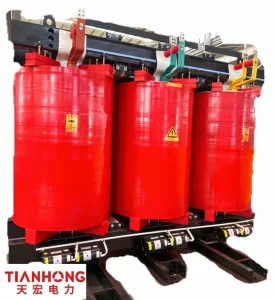
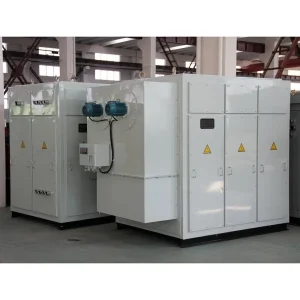
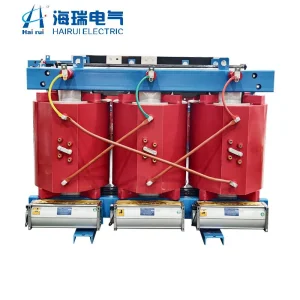
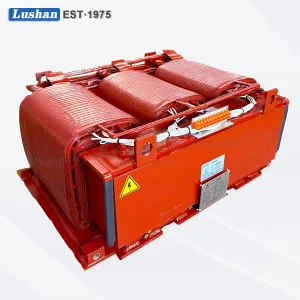
Explore our elite portfolio of instrument, dry-type, pad-mounted, and furnace transformers engineered for optimal efficiency and thermal performance.
An authoritative analysis of magnetic core physics, winding configurations, and loss-minimization engineering.
In modern power conversion, the choice of magnetic core materials governs the overall efficiency, thermal envelope, and power density of transformer assemblies. Traditional silicon steel laminations are highly effective at grid frequencies (50Hz/60Hz); however, when operating in the kilohertz (kHz) to megahertz (MHz) spectrum, core losses due to eddy currents rise exponentially. This is where Ferrite Core Transformers become the indispensable standard for Switched-Mode Power Supplies (SMPS), renewable energy inverters, and high-frequency induction systems.
Ferrite is a ceramic, non-conductive compound composed of iron oxide mixed with metallic elements. The two primary categories utilized in custom OEM transformer fabrication are:
To meet specific spatial and magnetic criteria, we design and manufacture across a broad range of geometric configurations. Selecting the appropriate core shape dictates thermal performance, EMI shielding capability, and winding ease:
The shift toward Wide Bandgap semiconductors and ultra-dense magnetic components.
The rising adoption of Silicon Carbide (SiC) and Gallium Nitride (GaN) power switches demands transformers that operate at elevated frequencies (above 500 kHz). We are optimizing high-saturation MnZn material recipes to prevent thermal runaway under highly dynamic switching patterns.
Traditional wire windings are being phased out in high-performance automotive DC-DC converters. Our production line is expanding its support for planar magnetics where multi-turn primary and secondary layers are embedded within high-Tg FR4 or polyimide PCBs to maximize heat dissipation.
Integrating telemetry sensors directly inside the transformer casing is becoming standard practice. Current transformers now feature integrated thermal couplings and monitoring modules that feed real-time performance diagnostics directly to centralized supervisory systems.
Providing customized power distribution and high-frequency components tailored for global industrial verticals.
Every application environment demands a distinct approach to electromagnetic insulation, cooling, and safety margins. For instance, in heavy-duty sectors like mining electrical operations, transformers must withstand extreme mechanical vibration, high levels of airborne particulate matter, and hazardous, explosive atmospheres. This is why our mining copper step-down isolation transformers utilize thick, vacuum-cured resin coats alongside rugged enclosures that seal the core off from external moisture and dust.
Conversely, the marine and navigation industries present corrosive salt spray and constant low-frequency shipboard vibrations. To satisfy navigation safety mandates, our vibration-proof marine power control isolation transformers undergo rigorous mechanical resonant frequency testing, complete with reinforced winding clamps and specialized marine-grade varnishes. In the clean energy sector, single-phase segmented high-impedance inverter transformers handle the complex harmonic loads associated with utility-scale solar photovoltaic (PV) grids and uninterruptible power supplies (UPS).
Leveraging state-of-the-art automation and advanced materials engineering to supply premium magnetics globally.
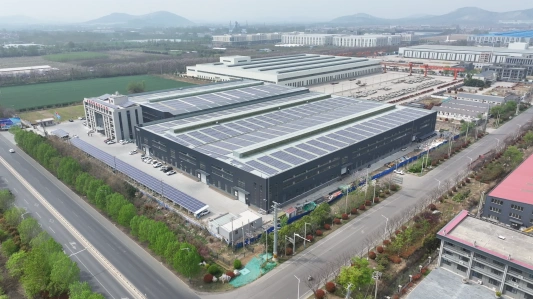
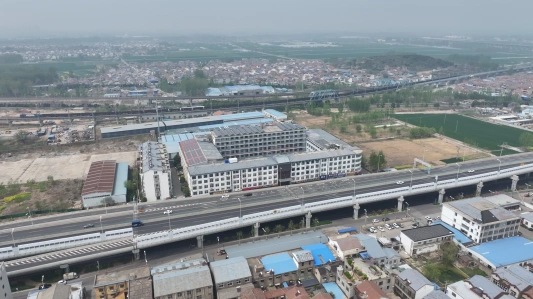
Established in 2005, Zhejiang Tanaka Electric Co., Ltd. is a premier high-tech enterprise dedicated to the research, development, custom manufacturing, and sales of high-performance transformers. Backed by a registered capital of 110 million RMB and a strong workforce of 201 to 500 personnel, our engineering strength lies in our highly skilled technical team—composed of 15 senior engineers, over 30 intermediate technicians, and 17 senior technicians. Our commitment to continuous R&D is reflected in our 18 active national patents.
Our manufacturing complex represents the pinnacle of China's Industry 4.0 evolution. We have deployed over 120 sets of specialized equipment to ensure dimensional precision and electrical repeatability. Our high-frequency winding processes utilize precision CNC automatic winding machines and automatic foil winding lines. For solid-cast resin systems, our facility leverages CNC static vacuum casting units and microcomputer-controlled gradient curing furnaces to ensure uniform curing without structural micro-voids, keeping partial discharge rates well below industry limits.
Rigorous quality checkpoints from incoming materials to field deployment.
To maintain our goal of "zero defects," we enforce a strict quality control matrix aligned with ISO9001 and ISO14001 standards. This process begins with strict inspection of core raw materials—specifically magnetic flux consistency in ferrite blocks, high-purity copper wires, and the electrical integrity of incoming insulation resins.
Our Quality Management Framework monitors every step of production. Following automated winding and vacuum encapsulation, every single transformer undergoes a battery of tests, including winding resistance measurements, voltage ratio verification, phase displacement checks, and high-potential (hipot) dielectric tests. For distribution systems, we conduct partial discharge analysis and temperature-rise testing to guarantee stable field operation.
| Business Parameters | Operational Details |
|---|---|
| Company Name | Zhejiang Tanaka Electric Co., Ltd. |
| Registered Capital | 110 million RMB |
| Core Product Portfolio | Power Transformers, Dry-type Transformers, Transformer Substations, Oil-Immersed Transformers, Distribution Boxes |
| Production Equipment | CNC Automatic Winding Machines, CNC Static Vacuum Casting Chambers, Automatic Foil Winding Systems, Microcomputer-controlled Gradient Curing Furnaces (120+ Sets) |
| Engineering Certifications | ISO9001, ISO14001, CE, CCC, UL, DOE |
| Global Support Capabilities | Full OEM/ODM Customization, Comprehensive Sourcing and Procurement Services |
Detailed professional answers on magnetic core saturation, winding losses, and OEM customization.
High-efficiency auto-transformers, pad-mounted substations, and amorphous alloy distribution systems built to specification.