Tanaka Electric
Tanaka Electric
Tanaka Electric
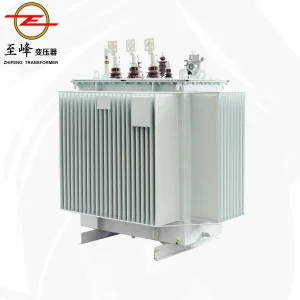
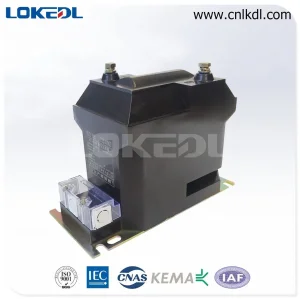
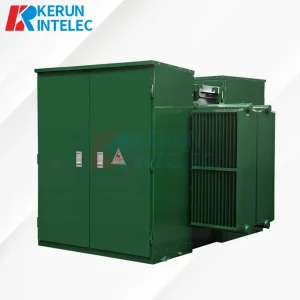
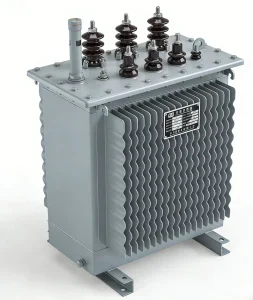
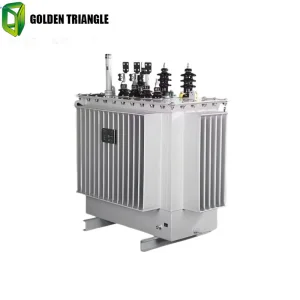
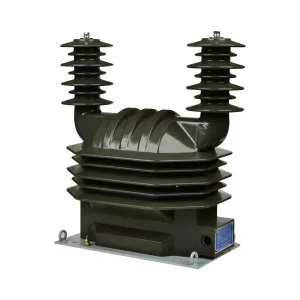
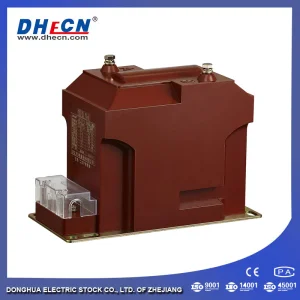
In high-voltage power networks, the design and configuration of primary and secondary windings dictate system stability, fault mitigation, and harmonic insulation. The Delta Star (Delta-Wye) winding configuration stands as the benchmark topology for secondary step-down distribution systems worldwide. By utilizing a delta-connected primary winding and a star-connected (wye) secondary winding, this architecture satisfies critical mechanical, thermal, and electromagnetic needs of modern industrial setups.
In a delta-connected primary, the zero-sequence components of magnetic flux find a closed loop inside the delta loop. This blocks third-harmonic currents ($3^{\text{rd}}$, $9^{\text{th}}$, $15^{\text{th}}$ order) from transferring to the primary line side, preventing high-frequency pollution of upstream power networks. Conversely, the star secondary provides a neutral return path, enabling simultaneous single-phase and three-phase loads. This balance between harmonic attenuation and supply adaptability is the reason why Delta Star transformers are a staple in global energy infrastructure.
Circulating third-order harmonic currents are trapped in the delta primary, maintaining a clean sinusoidal wave profile for distribution networks.
The wye secondary provides line-to-line voltages alongside a grounded neutral line, giving users the flexibility to power both unbalanced phase loads and motor drives.
The Dyn11 vector configuration introduces a 30-degree leading phase displacement, optimizing load sharing when operating parallel transformer groups.
The transition toward carbon-neutral grids requires updating legacy distribution equipment. Modern smart grids require transformers that do more than just step down voltage. They must handle bi-directional power flows, buffer intermittent inputs from solar/wind arrays, and resist thermal stress from EV rapid-charging networks.
International procurement mandates now demand high energy performance. EU Ecodesign standards and US DOE regulations impose strict maximum limits on load and no-load losses. Advanced manufacturers use amorphous alloys and high-grade grain-oriented electrical steel (CRGO) to reduce hysteresis losses, ensuring long-term grid efficiency and lower carbon emissions.
| Grid Challenge | Technical Demand | Delta Star Solution & Advantage |
|---|---|---|
| Renewable Energy Feedback | Bi-directional load variations, overvoltage limits | Customized vector groupings (Dyn11) with transient overexcitation protection |
| EV Chargers & VFD Harmonics | Total Harmonic Distortion (THD) heating issues | Delta primary absorbs unbalanced zero-sequence flux; K-factor rated coils |
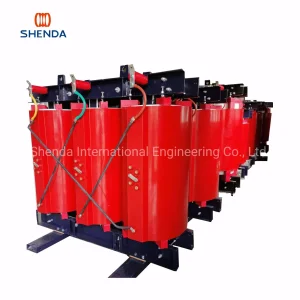
| Urban Space Constraints | Compact installation footprints with fire-safe operation | Dry-type cast-resin formulations and pad-mounted designs for public zones |
| Ecological Regulation | Biodegradable oil options and high efficiency index | Vegetable-ester fluid insulation (FR3) coupled with amorphous alloy cores |
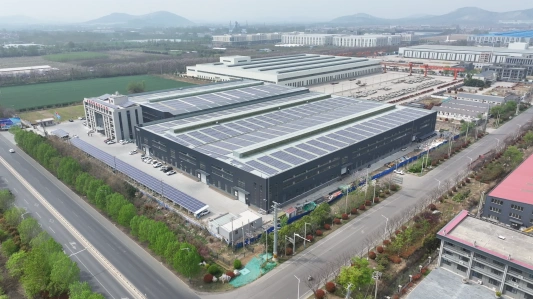
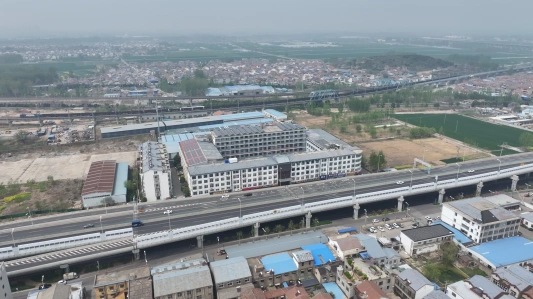
Operating as a specialized manufacturer, Zhejiang Tanaka Electric Co., Ltd. represents the technological advancement of China's electrical equipment industry. With a registered capital of 110 million RMB, we have built a manufacturing ecosystem designed for high precision, repeatability, and international compliance.
Our facility utilizes automated production lines equipped with over 120 sets of advanced machinery. Our processes incorporate automated foil-winding machines, CNC winding systems, vacuum casting chambers, and microcomputer-controlled gradient curing ovens. These manufacturing technologies allow us to prevent insulation voids and achieve high mechanical strength, enabling our transformers to withstand severe short-circuit stresses.
By strictly adhering to ISO9001 and ISO14001 standards, we monitor every step of production. Our quality control tracking begins at raw material procurement (sourcing low-loss silicon steel and high-purity copper) and extends through core assembly, active-part drying, oil filtration under vacuum, and final testing. This rigorous approach prevents product defects and ensures long-term operational reliability in the field.
Different industries require specific transformer configurations to handle their distinct operating conditions. Zhejiang Tanaka Electric designs custom configurations tailored to regional requirements and installation environments:
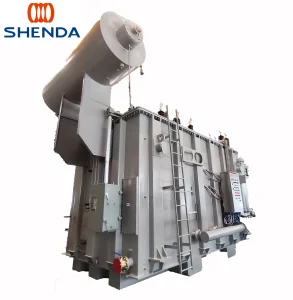
Industrial arc furnaces run under virtual short-circuit conditions during melting phases. Our furnace and reactor duty transformers are built with reinforced mechanical bracing and copper-bus output terminals to handle high-current, cyclic loading patterns.
Paper processing and electrochemical refining require constant direct current (DC) inputs, which generates considerable harmonic currents. Our rectifier-duty transformers feature electrostatic shielding to prevent line noise and reduce harmonic heating.
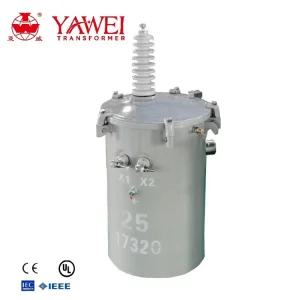
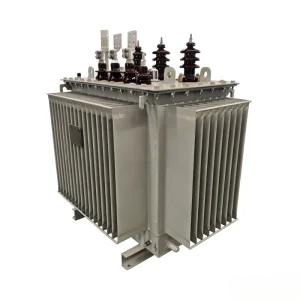
For public utilities, our pad-mounted oil-immersed transformers and pole-mounted overhead units comply with ANSI/IEEE standards. This ensures safe operation in residential areas, commercial properties, and municipal grids.
For global EPCs and utility buyers, transparency and institutional verification are critical. Zhejiang Tanaka Electric Co., Ltd. operates with verified credentials and structured business workflows:
| Business Type | Manufacturer, R&D Enterprise, Global Supplier |
|---|---|
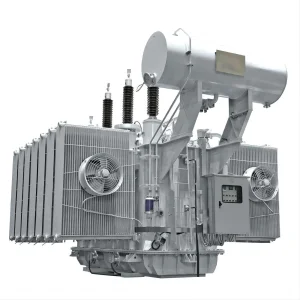
| Product Range | Power Transformers, Dry-type Transformers, Oil-immersed Distribution Transformers, Pad-Mounted Substations, Instrument Transformers (Current & Voltage Type), Amorphous Alloy Units |
| Registered Capital | 110 Million RMB |
| Year Established | 2005 |
| Institutional Certifications | ISO9001 (Quality Management), ISO14001 (Environmental Standards), CE Mark, CCC (China Compulsory Certification) |
| R&D Capacity | 15 Senior Engineers, 30+ Intermediate Technicians, 17 Senior Technicians, 18 Authorized Patents |
The Dyn11 vector configuration provides several important benefits. First, the delta primary connection circulates and cancels out third-harmonic currents, keeping them out of the transmission grid. Second, the star secondary provides a neutral point for grounding and allows the system to support both single-phase and three-phase loads. Lastly, the 30-degree phase shift helps balance loading across parallel-connected transformer banks.
Our coils are wound with high-purity copper conductors on automatic foil and CNC winding machines, ensuring tight, uniform tension. In our dry-type units, epoxy resin is cast under vacuum to prevent internal air bubbles. Oil-immersed designs are clamped with high-strength structural steel frames. This structure resists the radial and axial forces that occur during external electrical faults.
Yes. We design and build our units to comply with key international standards, including IEC 60076 for Europe and Asia, ANSI/IEEE C57 for North America, and CSA for Canada. Our design team adjusts the tank styles, bushings, protection accessories, and tap changers to match the standards of your target installation site.
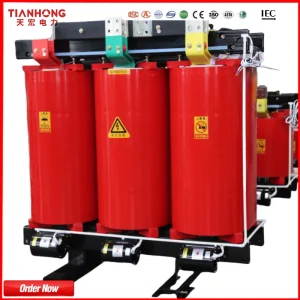
Dry-type transformers, which are cast in epoxy resin, are self-extinguishing and fire-safe, making them ideal for indoor environments like hospitals, commercial complexes, and transit hubs. Oil-immersed transformers provide better heat dissipation and are more cost-effective for outdoor, high-power installations. However, they require spill containment systems and regular dielectric fluid maintenance.
Standard distribution units typically ship within 6 to 8 weeks. Larger power transformers or specialized rectifier and furnace models usually take 10 to 14 weeks. This timeline covers core design reviews, materials procurement, assembly, winding, curing, and full factory acceptance testing (FAT).
We work with global freight forwarders to handle shipping by sea, rail, or air. All transformers are packed in heavy-duty export crates, and moisture-absorbing materials are placed inside the tanks. For installation and commissioning, we provide detailed technical drawings and remote support, or we can send engineers to the site to assist during start-up.