 Tanaka Electric
Tanaka Electric
Tanaka Electric
High-precision outdoor & indoor instrument transformers optimized for substation automation, industrial switchgears, and robust distribution grids across the Chittagong region.
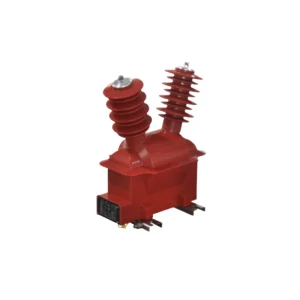
Outdoor cast resin structure suitable for high-humidity coastal zones of Chittagong. Ideal for power metering and relay protection.
Inquire for Chittagong Project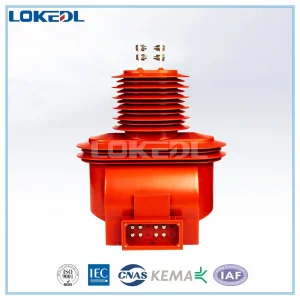
Designed for 33kV outdoor distribution substations. Exceptionally resistant to saline corrosion and ambient humidity.
Inquire for Chittagong Project
Enables easy retrofit installations for smart-grid monitoring without interrupting main industrial power feeds.
Inquire for Chittagong Project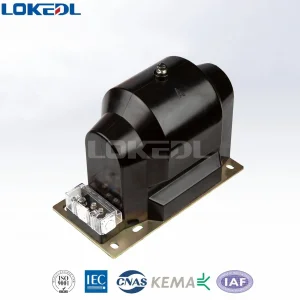
Engineered for high-density indoor switchgears. Highly stable core configurations support accurate secondary voltage outputs.
Inquire for Chittagong ProjectChittagong (Chattogram), the main maritime gateway of Bangladesh, handles over 90% of the country’s international trade. This crucial economic hub is undergoing rapid industrialization, driven by the expansion of the **Chittagong Export Processing Zone (CEPZ)**, **Karnaphuli Export Processing Zone (KEPZ)**, and the development of the massive **Bangabandhu Sheikh Mujib Shilpa Nagar (BSMSN)** in Mirsarai. As heavy industries such as steel mills (e.g., BSRM, GPH Ispat), massive shipbreaking yards, cement plants, and chemical manufacturing facilities scale up production, the demand for exceptionally reliable electrical infrastructure has reached unprecedented levels.
The Power Grid Company of Bangladesh (PGCB) and local utility bodies are modernizing transmission grids up to 400kV. In this high-power environment, accurate metering and robust system protection depend heavily on the quality of **Instrument Transformers (Current Transformers - CTs, and Potential Transformers - PTs)**. These components act as the sensory organs of the electrical grid, stepping down high currents and voltages to standardized values for safe measurement, billing, and protection relay operation.
Furthermore, Chittagong’s coastal geography presents unique environmental challenges. High humidity levels exceeding 90% during monsoon seasons, heavy ambient salt levels (saline fog) near the Bay of Bengal, and thermal stress demand electrical equipment that far exceeds standard mainland specifications. Standard components quickly succumb to insulation breakdown and tracking. Tanaka Electric's specialized outdoor cycloaliphatic epoxy-cast units and hermetically sealed oil-immersed transformers are engineered specifically to thrive under these coastal conditions.
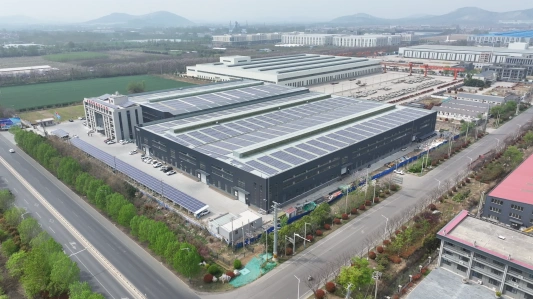
Tanaka Electric's advanced manufacturing floor utilizing automated vacuum casting technology.
Established as a premier high-tech enterprise, we design, manufacture, and export high-performance transformers backed by 110 Million RMB in registered capital and decades of engineering excellence.
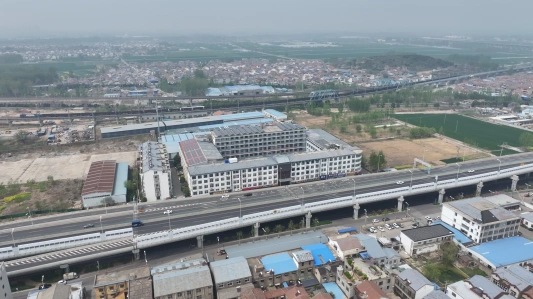
High-precision electrical testing lab ensuring zero-defect quality before packaging.
Our state-of-the-art production plant operates in strict accordance with the **ISO9001 quality management system** and **ISO14001 environmental standards**. We have heavily invested in high-precision, automated manufacturing equipment to eliminate human error and maintain tight tolerances:
From incoming copper and core material inspections to intermediate insulation diagnostics, and final routine testing (covering accuracy, power frequency withstand voltage, and impulse tests), we embed the pursuit of "zero defects" into every component shipped to international markets.
To ensure structural integrity and accuracy in Chittagong’s demanding environments, engineering teams must evaluate instrument transformers against strict international standards.
| Technical Parameter | Standard Specification (IEC 61869) | Tanaka Coastal Enhanced Option | Application Importance for Chittagong |
|---|---|---|---|
| Insulation Medium | Standard Epoxy or Mineral Oil | Cycloaliphatic Outdoor Epoxy / Amorphous Alloy Oil | Resists saline tracking, chemical vapor, and heavy rain ingress. |
| Accuracy Class (Billing) | Class 0.5 or 0.2 | Class 0.2S and 0.5S (Extended Low-load Accuracy) | Crucial for EPZ heavy industrial tariffs to prevent energy loss. |
| Creepage Distance | 20 mm/kV (Light pollution) | 31 mm/kV (Very Heavy / Marine Pollution Level IV) | Prevents flashover events caused by sea-spray accumulation on surfaces. |
| Partial Discharge | ≤ 10 pC at 1.2 Um / √3 | ≤ 5 pC (Under strict vacuum cast inspection) | Extends lifetime to 30+ years, minimizing insulation breakdown. |
| Temperature Class | Class B (Up to 120°C) | Class H / Class F (Optimized thermal headroom) | Prevents thermal runaway during hot Chittagong summer peaks. |
In heavy industrial processing plants like steel furnaces or textile mills within the **Chittagong Export Processing Zones**, power factor corrections and precise electrical bills are key operational metrics. Standard Class 0.5 transformers are insufficient when operating under low loading conditions (e.g., during off-peak maintenance phases). The deployment of **Class 0.2S and Class 0.5S instrument transformers** is critical: these configurations maintain high accuracy down to 1% of the rated current, saving operators from massive utility metering discrepancies over years of service.
As Bangladesh moves towards smart grid topologies under modern PGCB guidelines, we outline the integration path for next-generation instrument transformers.
Traditional CTs and PTs output analog values that must travel along heavy copper wiring to control panels, introducing electromagnetic noise and signal loss. The future lies in **LPCT (Low Power Instrument Transformers)** and digital core sensors. Our split-core monitoring sensors easily interface with local RTUs (Remote Terminal Units) for real-time thermal and load monitoring, providing analytics directly to control rooms via SCADA.
We are actively aligning our tech roadmap with the implementation of **Merging Units (MUs)** compliant with **IEC 61850-9-2**. This setup digitizes current and voltage waveforms at the primary equipment stage, transferring optical signals over fiber links to protection relays. This eliminates dangerous open-circuit current transformer secondary voltages, providing unparalleled safety to utility operators in Chittagong substations.
For substations requiring auxiliary power feeds, our low-loss amorphous alloy oil-immersed instrument transformers reduce no-load losses by up to 70% compared to standard silicon steel cores. This choice is vital to reduce long-term operational costs and carbon emissions, helping global and local organizations achieve compliance with sustainability frameworks.
Through our dedicated export desk, we manage complete shipping logistics to the Chittagong Port. We provide field engineers with complete installation manuals, primary injection testing guidelines, and detailed commissioning assistance to ensure smooth approval processes with Bangladesh electrical inspectors.
Complete list of our high-reliability units built to ISO, CE, and CCC international specifications, available for export delivery to the Bangladesh market.
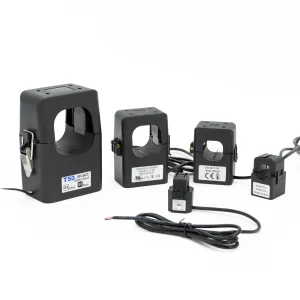
Designed for quick installation in existing panels. Wide measuring range from 10A to 5000A with precise mV output.
Inquire for Chittagong Project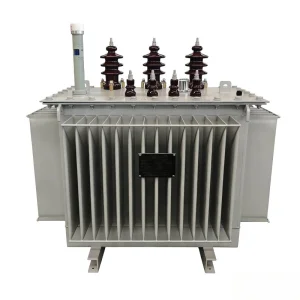
Premium amorphous core winding providing ultra-low loss operation. Ideally suited for continuous heavy-duty industrial grids.
Inquire for Chittagong Project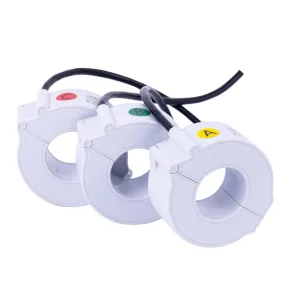
High IP rated housing designed to endure intense tropical rainstorms and humid maritime conditions.
Inquire for Chittagong Project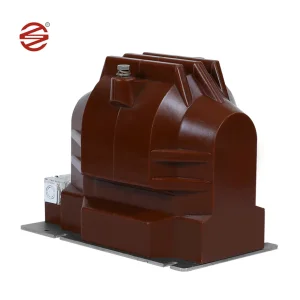
Compact design featuring full protective encapsulation. Ideal for smart residential and commercial sub-metering.
Inquire for Chittagong Project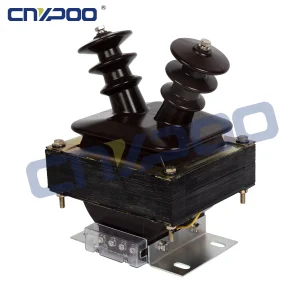
Highly accurate indoor voltage transformer tailored to feed protection relays and utility check meters.
Inquire for Chittagong Project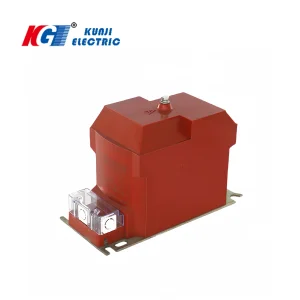
Fully enclosed structural design offering superior insulation resistance against dust and salt layer buildup.
Inquire for Chittagong Project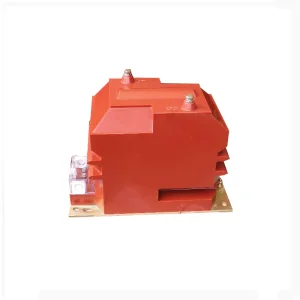
Provides a reliable 11000V stepdown to 110V. Extremely reliable design with an accuracy class rating of 0.5.
Inquire for Chittagong Project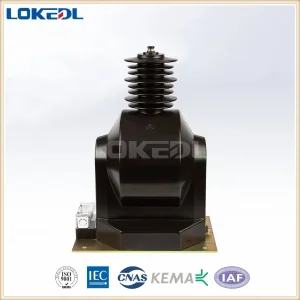
Engineered specifically for heavy duty 33kV substations. Designed with multiple secondary windings to support protection and metering.
Inquire for Chittagong Project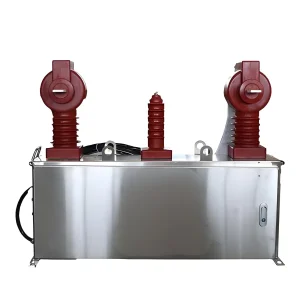
Combined CT/PT package designed for outdoor high voltage primary measurement on poles or grid boundaries.
Inquire for Chittagong Project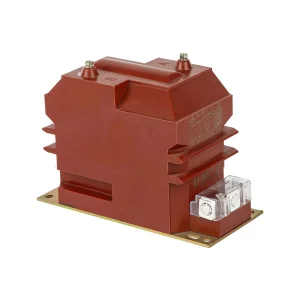
Features class 0.5S accuracy metrics, ensuring stable measurement performance at varying utility levels.
Inquire for Chittagong Project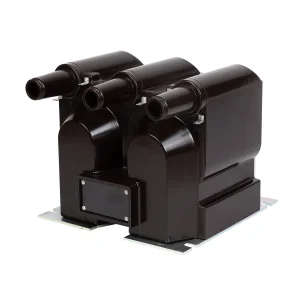
Integrates protection components within a single housing, optimizing space inside compact switchgear rooms.
Inquire for Chittagong Project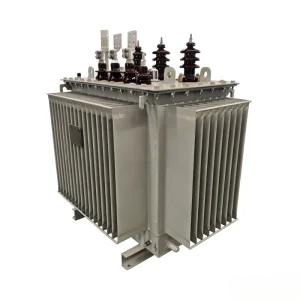
Built using premium amorphous materials. Ideal for precision instrumentation and highly critical control rooms.
Inquire for Chittagong ProjectExpert answers to common engineering questions regarding the selection, application, and operation of CTs and PTs in coastal environments.
Our transformers destined for Chittagong are treated with outdoor-grade cycloaliphatic epoxy resin rather than standard bisphenol-A resin. Cycloaliphatic epoxy provides superior resistance to ultraviolet (UV) radiation and highly saline coastal atmospheres. Additionally, we increase the minimum creepage distance to 31 mm/kV (matching pollution Class IV requirements) to prevent surface tracking and arc flashovers caused by salt and moisture accumulation on the outer surfaces of the units.
Under IEC 61869-2, standard Class 0.2 current transformers maintain their calibrated accuracy limits only from 20% to 120% of their rated primary current. In contrast, Class 0.2S (the "S" stands for Special accuracy) maintains high accuracy down to 1% of the rated primary current. This makes Class 0.2S transformers critical for billing applications in dynamic industrial hubs where machines cycle through low-power standby modes, ensuring the utility operator and customer are billed accurately under all load variations.
The total burden of a potential transformer is calculated by summing the continuous power consumption (VA) of all secondary connected devices, including protection relays, measuring instruments, and the impedance of the connection wiring. It is essential that the total connected load does not exceed the rated burden of the transformer. To maintain the accuracy class, the connected burden should remain between 25% and 100% of the transformer’s rated output. Running a PT with a load far below 25% of its rated burden can lead to a slight voltage reading inflation, while overloading it degrades accuracy and risks thermal failure.
Partial discharge occurs when small air bubbles or voids are trapped inside the solid epoxy resin during the casting process. Under high voltage stress, these voids experience localized electrical breakdown, slowly eating away at the surrounding insulation over time. This process eventually leads to complete phase-to-ground faults. At Tanaka Electric, our CNC static vacuum casting ensures that all air is evacuated. We perform routine partial discharge testing on every single unit, verifying that PD levels remain below 5 picocoulombs (pC), guaranteeing decades of trouble-free operational life.
We provide full support for industrial imports under Letters of Credit (L/C) commonly required by Bangladesh banks. All products are shipped with complete technical packages, including type test reports, routine test certificates, drawings, and factory calibration data. We arrange secure shipping directly to the Chittagong Port (Port of Chittagong) and work with local clearing agents to ensure all customs and regulatory compliance documentation is completed smoothly.