Tanaka Electric Tanaka Electric

How to Choose the Right Power Transformer Top 10 Tips?

Time:2026-10-27 Author:Charlotte
0%

Choosing a power transformer is not simply a matter of comparing prices or reading nameplate ratings. The right unit must match your voltage system, load profile, installation environment, and future operating plans. This guide, “How to Choose the Right Power Transformer Top 10 Tips,” explains the practical checks that experienced engineers use before approving a purchase. It also highlights details that are easy to overlook, such as inrush current, cooling methods, insulation class, impedance, noise limits, and available maintenance space.

How To Choose The Right Power Transformer begins with accurate site information. Record the primary and secondary voltages, continuous load, peak demand, frequency, and expected expansion. A transformer beside a dusty factory line faces different risks from one installed in a clean indoor substation. Check ambient temperature, humidity, altitude, ventilation, and fire-safety requirements. Review efficiency data and loss figures, not only the purchase quotation. Small losses can become significant operating costs over many years.

Manufacturer experience matters. Request verified test reports, applicable certifications, warranty terms, and references from similar installations. Confirm that the proposed design complies with local electrical standards and utility requirements. Independent inspection can provide extra confidence before shipment. Yet even careful selection can contain uncertainty. Load forecasts may change, and site conditions are sometimes recorded poorly. Recheck the measurements. Ask difficult questions. A slightly conservative design may cost more initially, but an undersized transformer can overheat, shorten insulation life, and disrupt production. Good selection is a technical decision, not a rushed transaction.
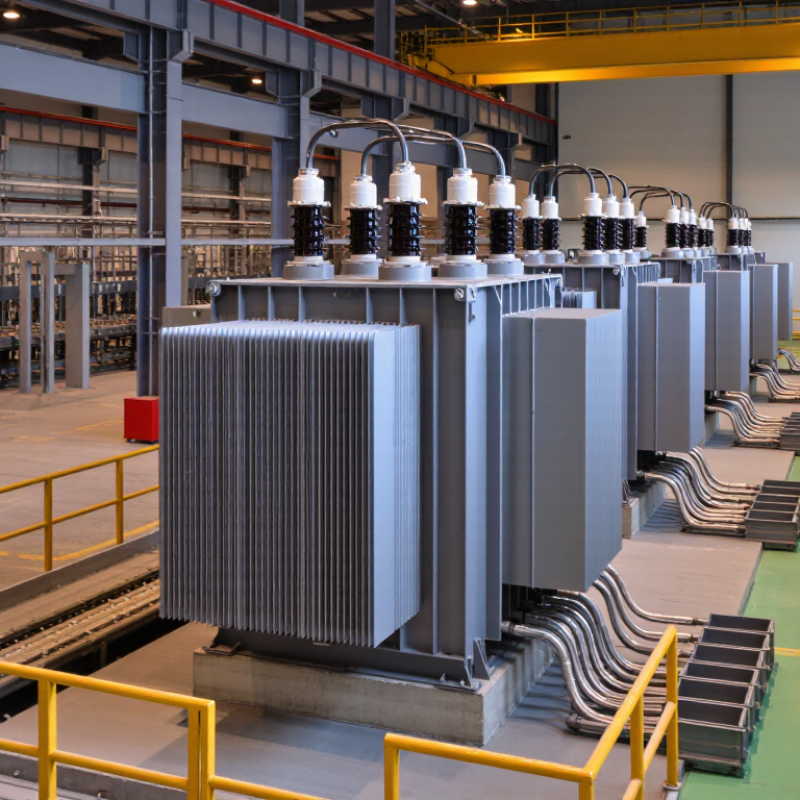
How to Choose the Right Power Transformer Top 10 Tips?

Define the Transformer’s Application, Load Profile, and Operating Conditions

Choosing a power transformer starts with its duty, not its nameplate capacity. Define the application clearly: utility distribution, factory production, renewable generation, data processing, or emergency service. Each duty creates different voltage, fault, cooling, and reliability requirements. A 10 MVA transformer feeding motors may face repeated inrush currents, while one serving offices may experience lighter, uneven demand.

Map the load profile in 15-minute intervals. Record peak demand, minimum load, harmonics, motor starts, and seasonal changes. A practical site survey often reveals short peaks that monthly averages hide. IEEE C57.91 provides guidance for transformer loading and thermal aging. Do not size only for today. The International Energy Agency reported global electricity demand would grow about 4% in 2024, increasing pressure on grid equipment. Growth can arrive quickly.

Check ambient temperature, altitude, humidity, dust, salt, seismic exposure, and indoor clearance. A hot, dusty plant needs a different cooling and enclosure strategy than a clean substation. Specify insulation levels and tap-changing requirements against the actual system voltage. The U.S. Department of Energy reported distribution-transformer lead times reaching roughly 12–30 months during the 2022 supply disruption. That detail affects planning. Bigger is not always safer. Oversizing can increase no-load losses and cost. My own selection reviews have shown one weakness: clean spreadsheets can still miss an overlooked harmonic source or future motor load. Verify field conditions before approving the design.

Calculate Voltage, Capacity, Efficiency, and Future Expansion Requirements

Choosing the right power transformer begins with accurate electrical data, not cabinet size. Record the primary and secondary voltage at the installation point. Check voltage variation, tap settings, and grounding requirements. Measure peak demand during production, startup, and nighttime operation. One meter reading is not enough. Calculate apparent power with kVA = kW ÷ power factor. Include motor starting current and nonlinear loads, because both can distort the estimate.

Capacity should support continuous operation without excessive winding temperature. Ask for efficiency at the expected loading level, not only at full load. No-load losses continue all day, while load losses increase with the square of current. A lightly loaded transformer may waste energy through constant core losses. An overloaded unit can create heat, voltage drop, and shorter insulation life. Check cooling conditions, altitude, ambient temperature, and harmonic content. These details are easy to miss.

Future expansion needs a realistic calculation. Review planned machinery, additional circuits, electric heating, and possible charging equipment for the next five to ten years. Keep practical spare capacity, but avoid paying for every uncertain idea. Plans change. A 20% reserve may be suitable for one facility, but insufficient for another. Confirm impedance, short-circuit strength, protection settings, test records, and service access with a qualified electrical engineer. A spreadsheet helps, but it can still be wrong when field conditions are ignored.

Compare Transformer Types, Cooling Methods, and Insulation Systems

Choosing the right power transformer starts with comparing its construction, cooling method, and insulation system. Oil-immersed transformers suit outdoor substations and heavy loads. Dry-type transformers fit buildings where fire risk and indoor cleanliness matter. Size matters. Review voltage, capacity, load profile, short-circuit duty, and available space before selecting a design.

Cooling directly affects service life. Natural oil and air cooling is simple and reliable for moderate ratings. Forced fans or pumps can support higher loads, but they add controls and maintenance points. Check the expected ambient temperature, altitude, ventilation, and harmonic losses. Heat changes everything. During inspections, thermal scanning can reveal blocked airflow, loose connections, or abnormal hot spots. A transformer may pass factory tests yet struggle in a poorly ventilated room.

Insulation deserves equal attention. Oil-paper systems provide strong dielectric performance, while cast-resin insulation can reduce liquid leakage concerns indoors. Compare moisture resistance, partial-discharge performance, temperature class, and aging behavior. Insulation ages quietly. Specify routine and type tests according to applicable IEC or IEEE requirements, then confirm the test records are traceable. Maintenance access also matters, although it is often overlooked. A neat specification can still miss cable bending space, noise limits, or future load growth. I would leave a realistic margin, but not an excessive one; extra capacity increases cost and may reduce operating efficiency.

Evaluate Safety Features, Standards, Maintenance, and Environmental Needs

How to Choose the Right Power Transformer: Top 10 Tips

Safety features should guide every transformer evaluation. Check insulation coordination, temperature alarms, pressure relief, grounding, fire resistance, and emergency isolation. IEC 60076 and IEEE C57.12.00 provide useful technical requirements. Local electrical codes still control the final installation. Safety comes first.

Maintenance needs measurable access. Inspect oil condition, bushings, seals, cooling fans, and connection torque. NFPA 70B emphasizes documented electrical maintenance programs. The U.S. Department of Energy reports that distribution transformers consume roughly 60–80 billion kilowatt-hours annually, or about 2.5% of U.S. electricity use. Better efficiency reduces both losses and operating cost. Small details matter.

Environmental conditions can change the specification. Coastal sites need corrosion protection, while dusty factories may require sealed enclosures and filtered cooling. At high altitude, reduced air density can affect cooling performance. IEA’s Electricity Grids and Secure Energy Transitions report estimates global grid investment must exceed 600 billion dollars annually by 2030. That pressure makes reliable transformers more important, but the cheapest unit may not be the best choice. A neat spreadsheet can still hide a poor decision. Recheck load growth, harmonics, short-circuit levels, noise limits, and spare-part access. I sometimes see maintenance budgets treated as optional; that assumption deserves another review.

Assess Suppliers, Total Cost, Warranty Coverage, and Technical Support

Choosing the right power transformer starts with a disciplined supplier assessment. Request audited quality records, factory acceptance test results, delivery history, and references from comparable installations. Check whether the supplier can provide routine test data under IEC 60076, including winding resistance, ratio, impedance, and insulation results. Ask who will answer a fault call at 2 a.m. One weak point is often overlooked: local spare parts and trained field technicians.

Total cost matters more than the purchase price. Compare load losses, no-load losses, installation, oil testing, transport, maintenance, and disposal costs over the transformer’s expected life. The U.S. Department of Energy estimated that its 2024 distribution-transformer efficiency rule could save about 3.6 quadrillion Btu over 30 years. That figure shows why efficiency deserves financial weight. A cheap unit may quietly consume more energy every hour. Use your actual load profile, not a perfect spreadsheet.

Warranty coverage needs careful reading. Confirm the duration, covered components, labor terms, transport responsibility, and exclusions for overheating, moisture, poor installation, or abnormal loading. Technical support should include commissioning guidance, remote diagnostics, training, and a written response-time commitment. Ask for a sample failure report. It reveals practical competence. No warranty fixes weak documentation. The decision may still feel imperfect, especially when suppliers offer different test scopes. Record those uncertainties instead of hiding them.

How to Choose the Right Power Transformer: Top 10 Evaluation Tips
No. Evaluation Area What to Check Evidence or Data Required Practical Decision Guide Weight
1 Application and Rating Confirm rated power, primary and secondary voltage, frequency, phase configuration, tap range, impedance, load profile, and future capacity requirements. Approved load schedule, short-circuit study, single-line diagram, ambient conditions, altitude, installation location, and duty cycle. Select a rating that supports expected demand without excessive oversizing. Allow engineering-approved growth capacity where justified. 15%
2 Applicable Standards Verify that the design, testing, insulation coordination, temperature rise, and accessories comply with the standards specified for the project. Standards compliance matrix, type-test reports, routine-test procedures, drawings, and quality-control records. Common reference families include IEC 60076 and IEEE C57 standards. The project specification should determine the final requirement. 10%
3 Efficiency and No-Load Loss Compare no-load loss, load loss, total loss, efficiency at the expected operating load, and the effect of harmonic currents. Guaranteed loss values, efficiency curves, test tolerances, loading assumptions, and loss-capitalization method. A lower purchase price may be offset by decades of electricity losses. Evaluate losses over the expected operating profile, not only at full load. 15%
4 Total Cost of Ownership Include purchase price, freight, duties, installation, commissioning, energy losses, maintenance, spare parts, downtime, disposal, and residual value. Five-year and expected-life-cycle cost model using local electricity rates, operating hours, load factor, and maintenance assumptions. Choose the lowest risk-adjusted life-cycle cost rather than automatically selecting the lowest initial quotation. 15%
5 Supplier Capability Assess relevant manufacturing experience, engineering resources, production capacity, financial stability, quality system, and project references. Audited quality certifications, comparable project references, factory capacity data, inspection records, and approved-vendor history. Prefer suppliers able to demonstrate successful delivery of transformers with comparable voltage, rating, environment, and compliance requirements. 10%
6 Warranty Coverage Review coverage duration, starting point, covered components, exclusions, remedy process, labor and freight responsibility, and warranty validity conditions. Signed warranty terms, defect notification procedure, response time, spare-parts policy, and records required to support a claim. Warranty periods commonly vary by contract and product type; compare the actual written terms rather than relying on verbal statements. 8%
7 Technical Support Confirm commissioning assistance, troubleshooting procedures, training, remote support, field service availability, documentation, and spare-parts access. Service-level agreement, escalation contacts, technician coverage area, response targets, manuals, drawings, and recommended spare-parts list. A technically strong support network can reduce outage duration and operating risk, especially for critical substations. 10%
8 Testing and Inspection Check routine tests, special tests, witness points, inspection hold points, factory acceptance testing, and independent verification requirements. Test plan, calibrated-equipment certificates, test reports, material certificates, inspection records, and nonconformance reports. Require test results traceable to the exact unit, serial-free project reference, approved specification, and applicable standard. 7%
9 Delivery and Logistics Evaluate manufacturing lead time, transport route, lifting limits, packaging, site access, customs documentation, storage conditions, and installation sequence. Detailed delivery schedule, shipping dimensions and mass, packing specification, logistics plan, risk register, and contingency plan. Select a supplier whose schedule aligns with the outage and energization plan; confirm responsibilities for damage during transport. 5%
10 Safety, Environment and Maintainability Review fire risk, noise, oil containment, leak prevention, cooling method, access for inspection, end-of-life handling, and environmental restrictions. Safety data sheets, noise data, cooling calculations, containment design, maintenance intervals, environmental declarations, and disposal procedures. Choose the design that satisfies local safety and environmental rules while allowing safe inspection, testing, repair, and future replacement. 5%
Total Evaluation Weight 100%
Scoring method: Rate each area from 1 to 5, multiply the rating by the assigned weight, and compare suppliers using the same technical assumptions, loss data, commercial terms, and service requirements.

FAQS

What should be defined before selecting a power transformer?

Define the duty clearly. A factory, office, solar site, and emergency system have different demands. Check voltage, faults, cooling, reliability, and operating schedules. The nameplate alone is not enough.

How should the facility’s load profile be measured?

Record demand in 15-minute intervals. Capture peak load, minimum load, motor starts, harmonics, and seasonal changes. Short production peaks may disappear inside monthly averages. One meter reading is not enough.

How is transformer capacity calculated?

Use the formula kVA = kW ÷ power factor. Include startup current from motors. Include nonlinear loads that may distort current. Then check continuous demand and expected growth. The estimate may still be imperfect.

Why should future expansion affect transformer sizing?

Review planned machinery, extra circuits, electric heating, and charging equipment. Consider realistic growth over five to ten years. Keep practical spare capacity. Do not pay for every uncertain idea. Plans change.

What environmental conditions must be checked?

Record ambient temperature, altitude, humidity, dust, salt, and seismic exposure. Check indoor clearance and ventilation. A hot, dusty plant may need stronger cooling and enclosure protection. Clean indoor conditions are different.

How do efficiency and loading affect operating cost?

Ask for efficiency at the expected loading level. No-load losses continue throughout the day. Load losses rise with the square of current. A lightly loaded unit can waste energy through constant core losses. Bigger is not always better.

What electrical details should be confirmed before approval?

Confirm primary and secondary voltage at the installation point. Check voltage variation, tap settings, grounding, impedance, and short-circuit strength. Review protection settings and service access. Test records should also be available. Paperwork can hide field problems.

What common mistake can weaken a transformer selection?

Relying only on a clean spreadsheet is risky. A survey may reveal an overlooked harmonic source or future motor load. Verify actual site conditions before approval. This review is not perfect. Recheck the assumptions.

Conclusion

Choosing the right power transformer begins with a clear understanding of its intended application, load profile, operating environment, and expected service life. How To Choose The Right Power Transformer depends on accurately calculating voltage requirements, rated capacity, efficiency targets, demand fluctuations, and possible future expansion. These factors help ensure reliable performance without unnecessary oversizing or excessive energy losses.

It is also important to compare suitable transformer types, cooling methods, and insulation systems according to installation conditions and maintenance capabilities. Safety features, applicable industry standards, environmental requirements, noise limits, and protection systems should be carefully evaluated before making a decision. Finally, assess potential suppliers based on product quality, technical expertise, total ownership cost, warranty coverage, delivery reliability, and after-sales support. A well-planned selection process can improve operational safety, reduce long-term expenses, simplify maintenance, and provide dependable power distribution throughout the transformer’s working life.

Charlotte

Charlotte

Charlotte is a seasoned marketing professional with a deep understanding of the company's portfolio and a passion for elevating its presence in the market. With a keen eye for detail and a commitment to excellence, she ensures that our professional blog is regularly updated with insightful articles......