Tanaka Electric
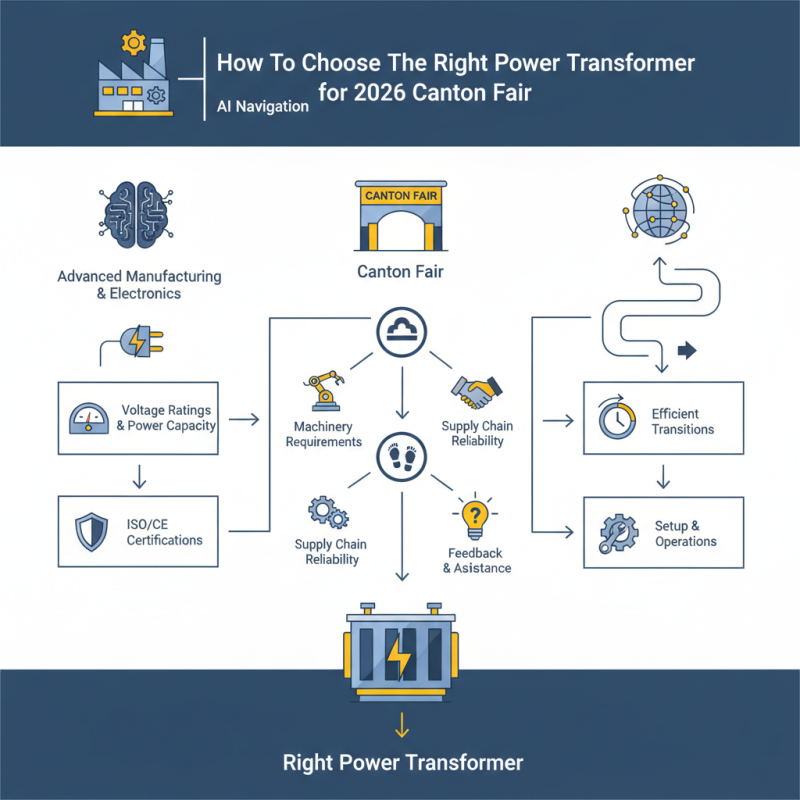
Choosing the right power transformer is crucial for businesses participating in the 2026 Canton Fair. This event will showcase advanced manufacturing and electronics, demanding specific transformer qualities. With the integration of AI in navigating the fair, buyers need to be smart about their choices.
To select the right transformer, consider the requirements of your machinery. Analyze the voltage ratings and power capacity that align with your applications. Don't overlook certifications like ISO or CE; they can impact your supply chain reliability.
As you explore the exhibition, remember the importance of efficient transitions between vendors and halls. A well-chosen transformer can significantly affect your setup and operations. Reflect on the feedback from previous fairs, and don’t hesitate to ask for assistance.
When preparing for the 2026 Canton Fair, understanding power transformers is essential. These devices convert electrical energy from one voltage to another. They play a crucial role in ensuring that various electrical equipment functions properly. Knowing their basic types is important. There are step-down and step-up transformers. Each serves different voltage needs.
You should think about your specific requirements. Consider the power rating, voltage levels, and physical size of the transformer. Don't overlook the importance of efficiency. An inefficient transformer can lead to energy loss. In addition, ensure that the selected transformer meets safety standards. Mistakes here can be costly.
Visualizing your setup can also be useful. Imagine where the transformer will fit in your exhibit. It should not obstruct anything and should be easily accessible. Consider testing the transformer before the fair. This way, you can assess its performance and identify any potential issues. The right choice can make a significant difference.
Choosing the right power transformer for the 2026 Canton Fair requires careful consideration of several key factors. Start by evaluating the power rating. Ensure the transformer can handle the maximum load. This is crucial for optimal performance and safety. Selecting an appropriately sized transformer minimizes risks of overheating.
Consider the application type as well. Different applications may have diverse requirements. For example, industrial applications may require heavy-duty transformers. In contrast, commercial uses might need something lighter. This mismatch can lead to inefficiency. Remember that proper matching can avoid issues later.
Tips: Always assess voltage requirements. High voltage isn't always better. Low voltage can sometimes provide the necessary power efficiently. Take into account cooling methods as well. Some transformers need oil cooling; others rely on air. These choices depend on your environment and usage.
Finally, think about future needs. Technology evolves quickly. Choose a transformer that allows for expansion or upgrades. This flexibility can help you adapt to changes easily. Reflect on whether your current choice meets both short-term and long-term demands.
When selecting a power transformer for the 2026 Canton Fair, understanding specifications and ratings is crucial. Power transformers are essential in electrical systems, stepping voltage levels up or down according to needs. A report by the International Energy Agency highlights that global demand for transformers is projected to grow by 4% annually. This rise suggests that discerning specifications is vital for competitive advantage.
When evaluating transformers, pay attention to key specifications like voltage rating, power rating, and efficiency. For instance, a transformer with a higher efficiency rating reduces energy loss, leading to lower operational costs. Look for transformers with at least 98% efficiency, as this can significantly impact long-term savings.
Tips: Always consider the environment where the transformer will operate. Is it a humid or dusty area? The environment can affect the transformer’s lifespan. Also, reflect on the load capacity. Providing a buffer is essential. Undersizing can cause overheating, while oversizing may lead to waste.
When selecting a power transformer for the 2026 Canton Fair, it’s crucial to understand the various types available and their specific applications. Power transformers are vital in transferring electrical energy between circuits. According to industry reports, the global power transformer market is expected to reach USD 28 billion by 2026, driven by the rising demand for electricity and renewable energy sources.
Different types of power transformers serve distinct purposes. For example, distribution transformers are widely used in electrical distribution systems. They usually operate at lower voltages, making them ideal for residential use. In contrast, power transformers function at higher voltages and are essential in industrial applications. A recent study noted that large-scale industries often favor autotransformers due to their efficiency and reduced copper losses, particularly in high-load applications.
Selecting the right transformer is not merely a technical decision; it has environmental implications too. Poorly chosen transformers can lead to energy inefficiencies, contributing to environmental concerns. Some designs may provoke higher harmonics, affecting power quality. It’s imperative to evaluate options critically and analyze load requirements carefully to ensure optimal performance while minimizing adverse effects. As the market evolves, staying informed through genuine market research becomes essential for making informed choices.
Budgeting for a power transformer purchase at the Canton Fair is crucial. Understanding your budget helps narrow down options. Consider not only the initial price but also installation and maintenance costs. These factors can add up quickly. The right transformer can enhance efficiency, so think long-term.
During your visit, examine various models and prices. Take notes on features and specs. Some models may seem cheaper but require more maintenance. This can inflate your costs later. Also, ask vendors about warranties and after-sales support. It’s common to overlook these details, yet they are vital for good investment.
Be aware of hidden costs. Transportation fees, tariffs, and taxes can increase your budget. In some cases, shipping delays can affect your project timelines. Always leave room for unexpected expenses. Budgeting is a complex process that requires careful consideration. Prepare to adapt as you gather more information at the fair.
: Knowing specifications helps to find the right transformer that meets your specific needs and operational efficiency.
Focus on voltage rating, power rating, and efficiency for effective energy management.
Higher efficiency transformers, ideally rated above 98%, reduce energy loss and lower long-term operational costs.
Humidity and dust levels can affect the transformer's lifespan and performance in different environments.
Undersizing can lead to overheating, while oversizing may waste energy and resources, impacting efficiency.
Distribution transformers are for residential use; power transformers are used in industrial applications for higher voltages.
Include not just the purchase price but also installation, maintenance, and hidden costs like shipping fees.
Unexpected transportation costs or delays may require adjustments in your budget and project timelines.
Overlooking warranties and after-sales support can lead to higher maintenance issues and costs later.
Informed choices based on research can prevent energy inefficiencies and align with environmental goals.
When preparing for the 2026 Canton Fair, understanding how to choose the right power transformer is essential for meeting your energy needs effectively. The article discusses the fundamental aspects of power transformers, including their specifications and ratings, which are critical in ensuring optimal performance. Key factors to consider encompass the application requirements, efficiency, and compatibility with existing systems.
Additionally, the article emphasizes the importance of comparing different types of power transformers based on their applications. By evaluating these factors and budgeting appropriately, attendees can make informed decisions that align with their operational goals and financial constraints. Ultimately, knowing how to choose the right power transformer will not only streamline processes but also enhance operational efficiency at the fair.
