Tanaka Electric Tanaka Electric

Top 10 Power Transformer Installation Best Practices?

Time:2026-11-03 Author:Isabella
0%

Power Transformer Installation Best Practices begin long before a transformer reaches its foundation. John J. Winders, author of Power Transformers: Principles and Applications, provides a useful technical reference for understanding transformer design and application. The supplied material contains no verifiable quotation from Winders, so I won’t attribute invented words to him. Instead, this guide uses an editorial field maxim: “Measure twice, inspect every connection, and document what you find.”

Small details matter. A level foundation, clear nameplate photographs, and correctly torqued connections can prevent avoidable trouble later. Safe lifting plans, suitable weather protection, verified grounding, and careful oil handling also deserve close attention. Each step should follow the manufacturer’s instructions and applicable site procedures. Guesswork has no place here.

This Top 10 guide examines practical decisions across receiving, storage, rigging, positioning, assembly, testing, and energization. It highlights checks technicians can perform, records teams should retain, and warning signs worth escalating. A clean test result is reassuring, but it does not replace sound installation practice. Nor does a checklist guarantee perfection. Conditions vary, and teams should pause when readings, equipment, or site conditions do not match expectations. That pause can feel inconvenient. It may also be the most professional decision on site.
Top 10 Power Transformer Installation Best Practices?

Assess Site Conditions, Load Requirements, and Installation Standards

Before selecting a transformer, inspect the site in person. Check soil bearing capacity, drainage, flood exposure, ventilation, equipment clearances, and delivery access. A wet corner can become a serious problem after heavy rain. Record ambient temperature and elevation, since both affect equipment cooling and ratings. Review the actual load profile, not only the nameplate total. Include motor-starting currents, harmonics, seasonal peaks, and planned expansion. NERC’s 2024 Long-Term Reliability Assessment projects North American peak demand growth of about 132 GW over the coming decade. This system-wide forecast is not a sizing factor for an individual site, but it reinforces the value of checking future load assumptions.

Tips: Photograph cable routes and access paths before construction. Confirm foundation dimensions, grounding, and phase connections against approved drawings. Keep lifting and maintenance clearances unobstructed. Small mismatches matter.

Apply the relevant requirements of the IEEE C57 or IEC 60076 standards, along with applicable local electrical and fire codes. Confirm protection settings, grounding design, and commissioning tests with qualified professionals before energization. Document insulation and oil test results where applicable, and retain the final settings and test records. A load spreadsheet can still miss real operating conditions; compare it with measured demand when records are available. Recheck assumptions if the site layout or equipment schedule changes.

Prepare the Foundation, Access Route, and Safety Controls

Prepare the foundation, access route, and safety controls

Before delivery, confirm the foundation matches approved drawings and the transformer’s operating weight. Check concrete strength, anchor-bolt positions, level, and clearances. Review soil bearing capacity where the crane will stand. A buried service or soft shoulder can turn a routine lift into a serious problem. Mud changes everything.

Walk the full access route with the delivery and lifting teams. Measure gate openings, turning space, overhead clearance, and pavement limits. Plan crane setup areas and ground mats before the truck arrives. OSHA’s crane standard, 29 CFR 1926.1408, generally requires at least 10 feet of clearance from power lines rated up to 50 kV, unless specified precautions apply. Confirm actual voltages and site conditions with qualified personnel; assumptions are not a control.

Set exclusion zones, assign a signal person, and agree on stop-work signals before lifting. Use documented lift plans, suitable PPE, and verified equipment. Keep unauthorized people away from suspended loads. The U.S. Bureau of Labor Statistics recorded 5,486 fatal work injuries across all industries in 2022. That figure is not transformer-specific, but it underscores why basic controls deserve serious attention. Even a careful drawing can miss a weak patch of ground or a late delivery change. Recheck the site on lift day.

Top 10 Power Transformer Installation Best Practices? - Prepare the Foundation, Access Route, and Safety Controls

No. Best Practice Installation Action Verification / Safety Check
1 Review approved documents Confirm the transformer rating, dimensions, shipping configuration, connection details, foundation drawings, lifting instructions, and site requirements against the approved project documents. Resolve drawing conflicts before delivery or lifting. Use the applicable manufacturer instructions and project specifications.
2 Prepare and inspect the foundation Construct the pad, plinth, or support structure to the approved dimensions and design. Provide specified anchor points, cable openings, drainage, and clearances. Verify dimensions, level, strength documentation, and anchor locations before the transformer arrives. Obtain engineering approval for deviations.
3 Confirm access-route capacity Plan the delivery route, turning areas, temporary works, and final positioning path for the transformer and transport equipment. Check route width, overhead clearance, ground bearing capacity, slopes, buried services, and any bridge or pavement load limits with the responsible site team.
4 Prepare a lifting and handling plan Use designated lifting points and approved lifting arrangements. Coordinate the crane, rigging, transport equipment, lift sequence, and exclusion zone. Confirm equipment capacity and inspection status, load weight and center of gravity, weather limits, communications, and competent personnel before lifting.
5 Protect the delivery and stored unit Inspect the unit on arrival for visible damage, movement, leakage, or missing parts. Keep openings sealed and preserve protective packaging as required. Record the delivery inspection and promptly report damage or abnormal indicators. Store the unit on a stable surface in the conditions specified for the equipment.
6 Establish electrical work controls Before electrical work, identify all possible sources of supply and follow the site isolation, lockout/tagout, test-before-touch, and grounding procedures. A qualified person verifies isolation and absence of voltage with appropriately rated, verified test equipment. Treat conductors as energized until confirmed otherwise.
7 Set, align, and secure the transformer Position the transformer on its prepared supports using the approved handling method. Align it with the equipment layout and secure it as specified. Check level, clearances, orientation, anchorage, and access for inspection and maintenance before removing handling restraints or completing connections.
8 Complete grounding and connections Install protective grounding and electrical connections in accordance with approved drawings, equipment instructions, and applicable electrical requirements. Inspect conductor routing, termination condition, phase identification, clearances, and connection tightness using the specified methods and values.
9 Control fire and environmental risks For liquid-filled units, provide any specified containment, drainage controls, and fire-protection measures. Keep the work area clear of ignition sources and manage fluids appropriately. Confirm site-specific spill response arrangements and required permits. Do not discharge transformer fluids or contaminated materials to drains or soil.
10 Inspect, test, and document before energizing Complete the specified pre-energization inspections and electrical tests, verify accessories and protective devices, and close out installation records. Review test results against approved acceptance criteria. Energize only after required approvals, safety checks, and commissioning hold points are complete.

Inspect, Lift, Position, and Assemble the Transformer

Before unloading, compare the transformer’s nameplate and shipping documents with the installation plan. Check for cracked porcelain, dented radiators, loose fittings, oil leaks, and damaged impact indicators. Photograph any concerns before moving the unit. Confirm the foundation is level, clean, and rated for the transformer’s weight.

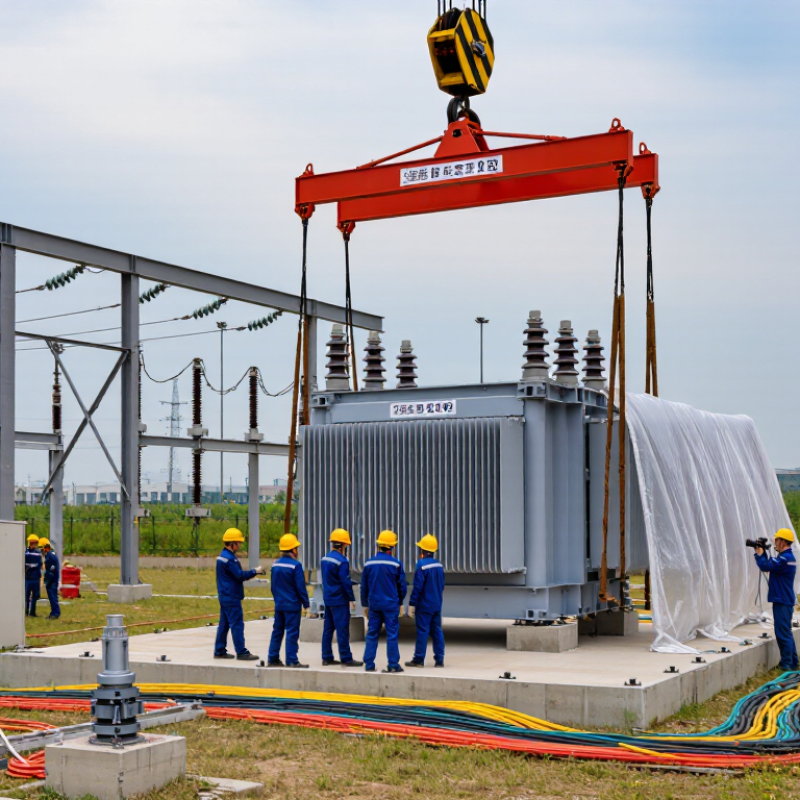
Use a written lifting plan and the designated lifting points specified for the unit. Verify crane capacity, sling angles, ground stability, and weather conditions with the qualified crew. Keep personnel clear of suspended loads. Never lift from bushings, radiators, or other parts not approved for handling. Pause if unsure. A small tilt can shift the load, even when the rigging looks steady.

Position the transformer to preserve access for inspection, cooling airflow, cable connections, and future maintenance. Check clearances against the project drawings before final placement. Assemble shipped components in the specified sequence, keeping openings protected from dust and moisture. Inspect gaskets, use the specified fasteners, and record torque values where required. Keep tools and loose hardware accounted for. One detail crews sometimes overlook is condensation after a cold delivery; allow equipment to acclimate as directed before opening sealed sections. Field schedules can make this awkward, but rushing can introduce moisture or debris that is hard to spot later.

Top 10 Power Transformer Installation Best Practices

Inspect, lift, position, and assemble the transformer in a controlled sequence.

The bars show workflow order, not measured performance or safety scores. Follow the project specifications, approved lifting plan, applicable standards, and the transformer manufacturer's instructions; only qualified personnel should perform installation and testing.

Complete Electrical Connections, Grounding, and Protective Devices

Power transformer installation depends on sound electrical connections, deliberate grounding, and correctly coordinated protection. Keep bushings clean and dry. Verify phase sequence, terminal labels, and current-transformer polarity before energizing. A reversed CT connection can make a protection relay respond incorrectly. Small checks matter.

Use calibrated tools and record actual torque values against the equipment manufacturer’s specifications. Do not treat “tight” as a measurement. Inspect each cable lug for full contact, and check that flexible connectors are not pulling sideways on bushings. Bond the tank, neutral, cable shields, and nearby metalwork to the grounding system according to the engineered design. IEEE Std 80 provides guidance for evaluating ground grids and step-and-touch voltages. The ground lead should be short, direct, and mechanically protected.

Protection needs equal care. Confirm that surge arresters sit close to the transformer terminals, and verify relay settings against available fault-current and coordination studies. CIGRE Technical Brochure 642 reported 964 major transformer failures in an international reliability survey. That count is not an installation-failure rate, but it shows why disciplined inspection and protection checks deserve attention. Photograph connections before covers go on. Recheck them after testing. One imperfect point: schedules can pressure teams to skip documentation, even when records make later troubleshooting safer.

Test, Energize, and Document the Installation

Before energizing a power transformer, confirm that installation checks are complete and recorded. Qualified personnel should perform insulation-resistance, winding-resistance, and turns-ratio tests using approved procedures. Compare results with factory data or established baseline values; investigate unexpected differences rather than explaining them away. Check bushing condition, oil level, grounding connections, tap position, and protection settings. Verify test instruments are within calibration. Small details matter.

Keep the area clear. Energize in a controlled sequence, following the approved switching plan and site safety controls. Watch for abnormal noise, leaks, unexpected current, or protection alarms. If a protective device operates, stop and investigate; do not simply re-energize. Record readings and observations with the time, ambient conditions, instrument identification, and personnel involved. Include as-found and as-left settings, test results, outstanding defects, and any approved deviations. Paperwork can feel tedious, and it is easy to miss a tap-position change or a test lead left connected. A second-person review helps catch these gaps before the records become the only account of what happened.

FAQS

What should be checked before choosing a transformer?

Inspect drainage, flood exposure, ventilation, soil strength, clearances, and delivery access. Record site temperature and elevation. Small mismatches matter.

How should the transformer’s load be estimated?

Review measured demand, motor-starting current, harmonics, seasonal peaks, and planned expansion. A spreadsheet can still be wrong. Recheck assumptions when equipment plans change.

What details matter when preparing the foundation?

Match the foundation to approved drawings and operating weight. Check concrete strength, anchor-bolt positions, level, and clearances. Confirm the crane area has firm ground.

How can the delivery route be checked?

Walk the entire route with delivery and lifting teams. Measure gates, turning space, overhead clearance, and pavement limits. Photograph cable routes and access paths.

What safety controls are needed for lifting?

Plan crane locations, ground mats, exclusion zones, and clear stop-work signals. Assign a signal person and keep people away from suspended loads. Mud changes everything.

Which installation checks should happen before energizing?

Qualified personnel should test insulation resistance, winding resistance, and turns ratio. Check bushings, oil level, grounding, tap position, and protection settings.

What should crews watch during energization?

Follow the approved switching plan and keep the area clear. Watch for unusual noise, leaks, unexpected current, or alarms. Stop and investigate if protection operates.

What information belongs in the installation records?

Record test results, readings, time, ambient conditions, instrument identification, and personnel. Include settings before and after work, defects, and approved deviations. A second review helps.

Conclusion

Power Transformer Installation Best Practices begin with a careful assessment of the site, expected electrical load, environmental conditions, and applicable installation standards. Before equipment arrives, prepare a stable foundation, confirm that access routes can accommodate delivery and lifting equipment, and establish clear safety controls for the work area. Thorough planning helps reduce delays and supports a safe, reliable installation.

Next, inspect the transformer and its components for damage, then lift and position the unit using suitable equipment and approved procedures. Assemble it as required, complete electrical connections, establish effective grounding, and install the specified protective devices. Before energizing, carry out the necessary checks and tests to verify connections, insulation, grounding, and protection systems. Document inspection results, test readings, and key installation details so the work can be reviewed and future maintenance can be planned.

Isabella

Isabella

Isabella is a dedicated marketing professional with a sharp focus on driving brand growth and engagement through strategic content creation. With an extensive background in digital marketing, she combines her passion for storytelling with her keen understanding of industry trends to deliver......